

The patient dog casually waiting for her pool to fill.
Pop Culture Ephemera
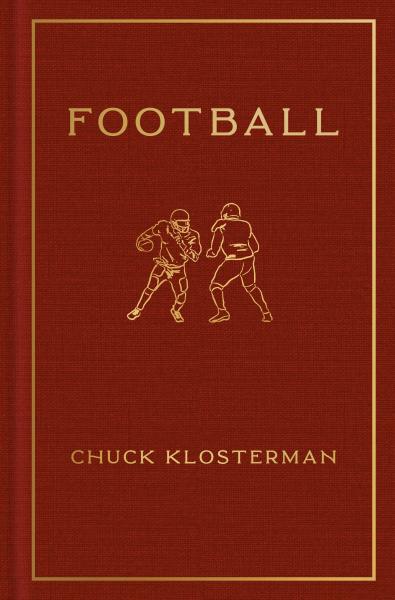
- Chuck Klosterman – Football (2026) (Published by Penguin): “What happened to quarterbacking is what happened to most of America over the same 75-year span. The overall efficiency of society has increased” This is my second Chuck Klosterman book, so I knew that I was getting a world-champion-level over-thinker. This book came out earlier this year, but I wanted to time it closer to the start of the football season. It’s an illuminating take on a sport that he claims will have an eventual decline. It’s a hard claim to refute when we see the slow demise of baseball, boxing, and horse racing since their times of overwhelming popularity. There are observations, like his descriptions of the Canadian Football League where within a few pages he even contradicts himself, but it feels organic as we follow his line of reasoning.
The two chapters that stick out to me are the one on the best players of all-time rankings and his observations of watching football in his youth. His reasoning is solid for Jim Thorpe as the best player of all-time. Chuck’s rules for how you would compare players of different eras is thorough enough to illustrate the folly of the endeavor, in a way that my friends and I would have decided over a few beers. The nostalgia of sports from our youth is important to me. We learn some of our first lessons of futility, defeat, patience, and victory from watching our favorite teams and players. His father’s simple quote about Doug Flutie sums up what most of us love about the underdogs: they don’t give up. It’s not a book for the serious fan looking for trivial stories about past players or history. It belongs in the Sociology section of your collection, but it will make you look at the game just a little differently.
- Doctor Who – “Eve of the Daleks” (Special #1) (BBC) (2022): “Daleks do not have managers.” – Dalek. The Thirteenth Doctor (Jodie Whitaker) with companions Yaz (Mandip Gill) and Dan (John Bishop) are coming off a six-part, high-budget, and high-concept Flux storyline. This New Year’s Day episode (1/1/2022) ends a trilogy of New Year’s Day episodes, although this is the first of the three to actually take place on New Year’s Eve.
This bottle episode puts them in a self storage building with Sarah (Aisling Bea) and Nick (Adjani Salmon) in a smart, time-loop story, they battle Daleks. The story positions a romantic comedy between Sarah and Nick within the loops as they try to outwit the Daleks. As a standalone episode, this is exactly what the series needed at this time. It’s funny and clever, and I didn’t realize how much this was needed until I watched it twice in a row. I’ve only got two more Whitaker episodes, and now I’m in to territory of episodes I didn’t watch when they debuted.
- Elvis Costello & the Attractions – “Almost Blue” (from Imperial Bedroom) (1982): “There’s a girl here and she’s almost you / Almost all the things that your eyes once promised / I see in hers too.” But wait, didn’t Elvis Costello & the Attractions release an album in 1981 titled Almost Blue? It’s confusing but true. I don’t usually list Elvis Costello among my favorite artists, but he’s among my most respected artists. The man associated for the years leading up to this with the New Wave / post-punk movement, attempts to write a jazz standard influenced by artists like Chet Baker who synthesized influences of the blues in their own jazz standards of the 1930s, ’40s, and ’50s. The full circle aspects of this song that was embraced by jazz artists of the ’80s is a great story. The comparison of a past love to a current love in the lyrics just brings the whole idea of the present reflecting the past full circle.
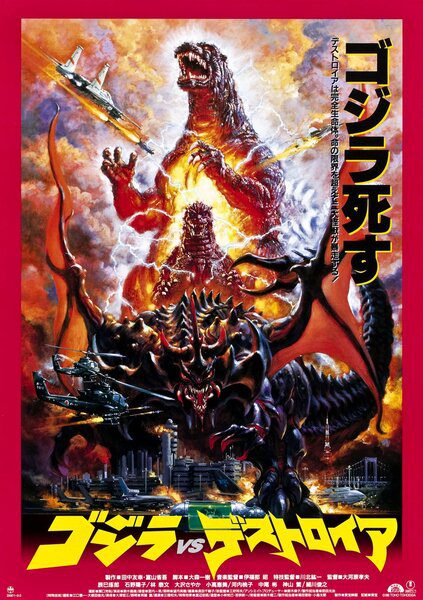
- Godzilla vs. Destoroyah (1995) (Directed by Takao Okawara): “I’ve a feeling this is going to be Godzilla’s last fight.” – Miki Saegusa. This film brings an end to the Heisei era that started with the reboot in Godzilla Returns (1986). How do you know it’s the end? Well a big clue is that the tagline is “Godzilla Dies.” I appreciate how they used the original Godzilla (1954) (the only other film that exists in this continuity) as a main reference point in this film. Symbolically, Japan was putting to bed the post-war era for good as Godzilla melts down. The battles are impressive, especially compared to the past couple of lesser-quality films. The villain comes from the creatures born of the Oxygen Destroyer used to stop Godzilla in the original movie. My journey through the films might pause here for awhile with the new film due later this year, because this is a pretty solid end to the era.
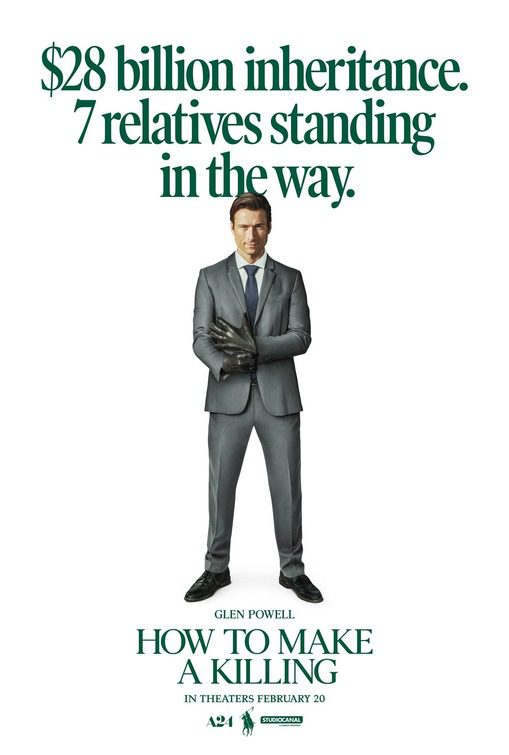
- How to Make a Killing (2026) (Directed by John Patton Ford): “If I were to prune a few branches of the family tree… where would I start?” I’ve never watched Kind Hearts and Coronets (1949) that serves as the source material for this updated remake. With Glen Powell as the lead character who decides on a revenge plot to kill seven relatives to gain his inheritance and Margaret Qualley as his love interest/rival from childhood, I wanted to like this film. About 30 minutes into it, I wanted to find elements to trash it here. I just couldn’t generate enough emotion to go either direction. Part of the problem is that the film plays out as a jail confession to a priest. That element doesn’t add anything to a film that could have just played out in chronologically. The Powell narration doesn’t add any value to the film. After Topher Grace’s small role is over, there’s not enough comedy for this dark comedy. It’s just dark. I am in a minority here, but if your film takes place in New York City, at least get some better B-roll footage to try to fake it. It’s the most recognizable city in the world and huge parts of it look nothing like the City That Never Sleeps. There’s some talent in the direction and acting, but nothing memorable for when I make those year-end lists.
Best of the Rest
- Chet Baker influenced Elvis Costello’s writing of “Almost Blue” in 1982. Baker was at the end of his career and just months away from passing away when he covered the song written as a tribute to his own songs. This was officially recorded in 1988 for the soundtrack to a documentary on his life, Let’s Get Lost (1988). It’s a wonderfully touching version of the song that lets you know that Elvis got it right.
- There are song covers with levels. Then there are covers with levels upon levels. Doing a version of her husband’s song on her The Girl in the Other Room album in 2004 is too meta for words. It’s a Jazz Standard written by a New Wave star that reflects influences from the past about a new relationship comparing itself to a previous relationship sung by the writer’s wife who married the songwriter in 2003. It slows down the tempo and features Diana’s underrated piano skills. I now consider it the definitive version of the song. It’s just another circle within the circle.
- If this new Carrie (Amazon) due October 7th was directed by anyone other than Mike Flannagan, I’d be instantly turned off. Even with my complete faith in Flannagan to handle all things Stephen King, there’s still an inkling of doubt. The trailer loses some of the horror edge of all the previous incarnations, and using it as a modern-day bullying/social media lesson is dangerous. It’s always been about the power of the victim, but there’s more to it than that. The important lessons of the story are buried in religion, authority figures, and the power of puberty. I’m approaching this with caution.
Sunday Morning Tuneage Flashback
- Sunday Morning Tuneage from 8/29/2010, classes started the previous Thursday at UNT, and I was working seven days a week. That only left time to leave to watch the boys play football (a loss for both boys the previous week) and quick trips out for Thai dinners. College football was starting with LSU vs. North Carolina, I was behind on Big Brother (CBS) and Futurama (Comedy Central) ended their season with a guest appearance from Devo (the show also finally reached 100 episodes). The list of the week was of a show that I have watched as much as any other at that point in my life. I probably haven’t watched a dozen episodes since, so I’m curious how I view it still.
My #51 Top TV Show of All-Time was The Outer Limits (ABC) (1963-1965): I know that there was a well-respected revamp of the show that aired from 1995-2002 on Showtime and in syndication. My rating applies only to the original run on ABC. It’s easy to pigeonhole the show into a Twilight Zone clone, but it’s different on many levels. This show leans more into the science-fiction elements and the biggest drawback might be its reliance on monster-of-the-week stories that appear too often. It served as a feeder show to Star Trek since you can’t seem to watch more than four episodes and see a future cast member. I don’t rewatch this as often as Twilight Zone, Night Gallery, or Alfred Hitchcock Presents, but I still hold it in high esteem, maybe just not enough to make it a #51 type of show in the future ratings. - BEST BRADY BUNCH EPISODES OF ALL-TIME (2010)
- 10. “Adios, Johnny Bravo” (S.5 E.1)
- 9. “The Cincinnati Kids” (S.5 E.11)
- 8. “The Dropout” (S.2 E.1)
- 7. “Father of the Year” (S.1 E.14)
- 6. “Ghost Town U.S.A.” / “Grand Canyon or Bust” / “The Brady Braves” (S.3 E.1-3)
- 5. “Greg Gets Grounded” (S.4 E.15)
- 4. “The Voice of Christmas” (S.1 E.12)
- 3. “Mail Order Hero” (S.5 E.2)
- 2. “Hawaii Bound” / “Pass the Tabu” / “The Tiki Caves” (S.4 E.1-3)
- 1. “Our Son, The Man” (S.2 E.18)
- BEST BRADY BUNCH EPISODES OF ALL-TIME (2026)
- 10. “The Subject Was Noses” (S.4 E.18): It’s dominated in memory by the iconic “Oh, my nose!” It also happens to be a pretty funny episode about teenage insecurities.
- 9. “The Slumber Caper” (S.2 E.3): The Marcia-centric episodes don’t get enough love. This one has the very simple joke of the itching powder at her first time hosting a sleepover.
- 8. “Her Sister’s Shadow” (S.3 E.10): Famous for “Marcia, Marcia, Marcia,” it might also be one of the most straightforward accurate portrayal of sibling psychologies.
- 7. “Getting Davy Jones” (S.3 E.12): I promise the whole list won’t be all Marcia episodes. Davy is charming and sings his song “Girl” which just happens to be in a movie that month. Marketing synergy was alive even in 1971.
- 6. “54-40 and Fight” (S.1 E.15): It’s an episode that sounds like a foreign-language fever dream to children of today. The family has acquired enough trading stamps that the boys want to redeem for a rowboat and the girls want to redeem for a sewing machine. It’s a fun story of sibling rivalry including a fun house of cards competition.
- 5. “Amateur Nite” (S.4 E.16): Calling themselves “The Silver Platters” as they try to win money to give their parents an engraved silver platter for their anniversary, we get the musical performances of “Keep On” and “It’s a Sunshine Day” which leave no doubt that Schwarz had bigger plans for the cast.
- 4. “Hawaii Bound” / “Pass the Tabu” / “The Tiki Caves” (S.4 E.1-3): Probably the most iconic story of the series that includes a surfing competition and a haunted Tiki idol. It would be fair to say it’s one of the most entertaining stories of the show, and it’s also probably their “jump the shark” (or “have a surfing wipeout”) moment. This transition from S.3 to S.4 has the most remarkable change in the appearance of the characters, Cindy loses her pigtails!
- 3. “The Personality Kid” (S.3 E.6): The lesson is to not try to be like anyone else, because your friends and family love you just the way you are. That’s like every fifth episode of most shows that feature children. Here it’s better because Peter tries to be Humphrey Bogart and give us the iconic “Pork chops and applesauce.”
- 2. “The Voice of Christmas” (S.1 E.12): It’s the only holiday episode of the series. That’s odd in itself. It’s a touching episode and features Carol’s singing (a talent ignored the rest of the series) and a child’s wish granted. We wouldn’t get another holiday-themed episode until A Very Brady Christmas (1988), which also referenced this episode.
- 1. “Adios, Johnny Bravo” (S.5 E.1): Having started off the past couple seasons with big trips, the budget was scaled back for S.5. It gave us the story that has stayed at the top of my memory all these years later. Everything is inexplicable about this story, and yet, it’s completely logical within the Brady Universe that Greg would instantly become a teen idol called Johnny Bravo. It’s funny that the humor also tries to reinforce a stereotype against the current counterculture, turning away from the teen crowd that they hope to appeal to when they go on tour.
1976 in Review
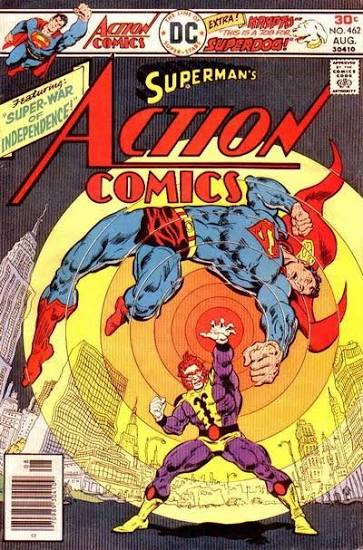
- August – Action Comics #462 (DC Comics): ” …And I have to thank this curious holiday called ‘Independence Day’ for giving me the inspiration for Superman’s new abode” – Karb-Brak. Cover by Bob Oksner/Tatjana Wood. Written by Cary Bates. Art by Curt Swan. The “Super-War of Independence” Superman is sent back to 1776 by Karb-Brak. The back-up story was a good Krypto dog tale.
- August 16 – Dave Stockton wins the PGA Championship with a 15-foot putt on the 18th hole, avoiding a playoff round with Ray Floyd and Don January.
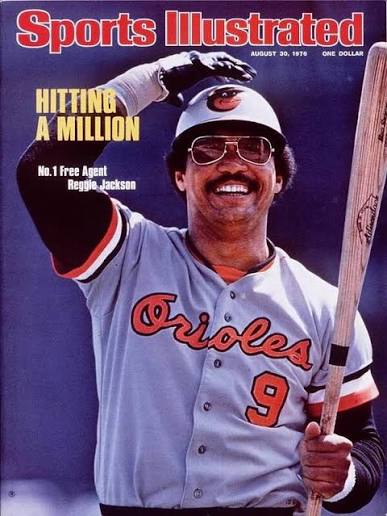
- August 30 – Sports Illustrated. Reggie Jackson was a Spring Training holdout with the Oakland A’s when he was traded to the Baltimore Orioles and didn’t reach a contract agreement until May. The first free-agent market ever was about to hit after the season. Reggie Jackson made the most of his single season as an Oriole with 27 home runs, 91 RBIs, and 28 stolen bases. He would sign a 5-year, $2.9 million contract with the New York Yankees for the 1977 season and go on to make more history.
What the Hell Did I Put in My Mouth?

Oreo: Cinnamon Bun
These are back after a decade. I don’t remember their flavor originally. These have a decent pastry flavor of the cinnamon bun, but suffer from the same fate of all cinnamon releases these days. The default flavor of cinnamon is now seen through the lens of Cinnamon Toast Crunch. The cinnamon flavor here is a sweet-cereal taste for me and less the baked-goods flavor. It’s a decent sweet cookie that will probably appeal to a huge range of customers. I just want more authentic cinnamon flavor that isn’t as sugary.
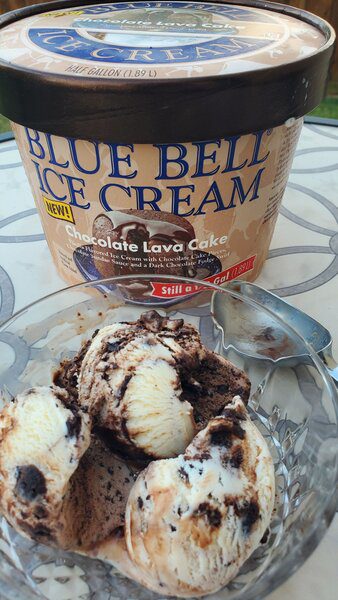
Blue Bell:
Chocolate Lava Cake
The picture makes this look more vanilla based than most of the servings out of the container. The chocolate-cake pieces, dark-chocolate-fudge swirl, and chocolate sundae sauce might as well have had a chocolate ice cream base to give into the decadence. The cake pieces are huge compared to most mix-ins. If I’m going to get so many calories in each bite, just lean into all chocolate. It’s a tasty ice cream that is best experienced in a small cup, not my usual style.

A&W: Root Beer Float
There is a A&W Cream Soda. It’s not the dark amber color of root beer, but it has the same vanilla-heavy taste. I’m hard pressed to tell you how this differs except in color. I believe they are trying to recreate the remains of the Root Beer Float after you’ve eaten the ice cream. It works, in general. The problem with the cream soda and vanilla flavors in general (even in Coke) is the artificial aftertaste of the vanilla used. I don’t mind this soda. I’m a fan of the A&W brand for mainstream root beer. I just don’t know that I wouldn’t want to add my own splash of vanilla syrup to a regular root beer instead.
“It’s almost touching, it will almost do
There is a part of me that’s always true
Always not all good things
come to an end now it is only a chosen few” – Elvis Costello
