
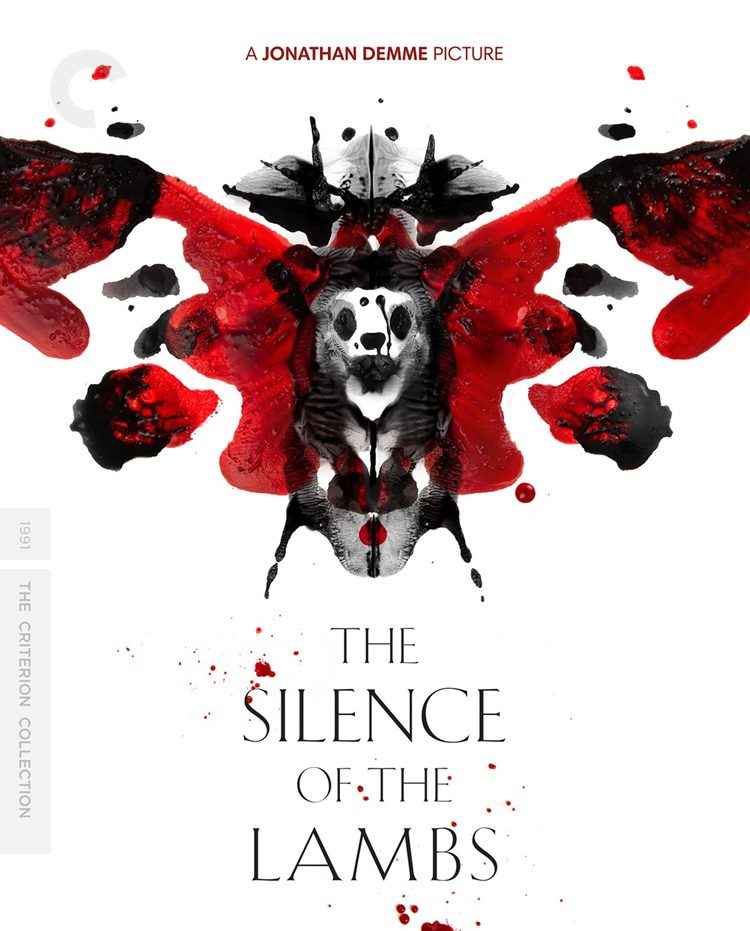
Based on the novel by Thomas Harris, Jonathan Demme’s The Silence of the Lambs is one of those rare films that manages to be both a gripping thriller and a remarkably intelligent character study. Released in 1991, the film follows FBI trainee Clarice Starling (Jodie Foster) as she seeks the help of imprisoned serial killer Hannibal Lecter (Anthony Hopkins) to catch another murderer, the elusive Buffalo Bill (Ted Levine). What could have quickly become a conventional serial-killer movie becomes something far more unsettling, sophisticated, and memorable.
Buy The Silence of the LambsClarice is assigned to interview Lecter, a brilliant psychiatrist and imprisoned murderer, because FBI investigators believe he may have insight into Buffalo Bill’s motives. Buffalo Bill has been abducting and killing women, and his victims are discovered with their skin removed. Clarice hopes Lecter will provide information that can help investigators identify and capture him. Lecter agrees to help, but only if Clarice will reveal details about her own troubled past in return. Their conversations become a psychological chess match as Clarice tries to extract information from a man who seems to understand her better than she would like.
Meanwhile, the FBI investigation intensifies as another woman is kidnapped. Clarice gradually pieces together clues about Buffalo Bill, while Lecter proves both helpful and dangerously manipulative. The investigation eventually leads Clarice to the killer’s isolated home, where she finds herself trapped in darkness and forced to confront Buffalo Bill alone. The suspenseful final sequence brings the film’s various storylines together and gives Clarice the opportunity to prove herself.
Much of the film’s power comes from the relationship between Clarice and Lecter. Hopkins gives an extraordinary performance as Lecter, creating a character who is terrifying without needing to raise his voice. He is cultured, articulate, and seemingly fascinated by Clarice’s intelligence. His politeness makes him even more disturbing because the menace is always just beneath the surface. Foster is equally impressive, portraying Clarice as intelligent and determined while allowing us to see her vulnerability and uncertainty. She is not simply chasing a killer; she is trying to prove herself in a male-dominated profession.
Demme also makes excellent use of atmosphere. The film rarely relies on graphic violence to create suspense. Instead, it builds tension through silence, confined spaces, and the unsettling feeling that danger may be just outside the frame. Several sequences are master classes in suspense, particularly the climactic confrontation between Clarice and Buffalo Bill.
The Silence of the Lambs was also a remarkable awards success. At the Academy Awards, it won Best Picture, as well as Oscars for Best Director, Best Actor, Best Actress, and Best Adapted Screenplay. It remains one of the very few horror or thriller films to win Best Picture.
More than three decades later, The Silence of the Lambs remains disturbing, suspenseful, and remarkably effective. Its memorable performances, psychological depth, and masterful direction make it a landmark thriller. Few films have ever made evil seem so intelligent—or suspense seem so quiet.
