
Being in this world for 41 years, I have obviously realized that history has so many dark sides to it. The era of slavery definitely comes to mind. It was a savage, disturbing period for humanity. But as terrible as it was, it will always be apart of our history, and I think that people (especially young ones) should be educated about it more. It was not just an American tragedy, it was world wide.
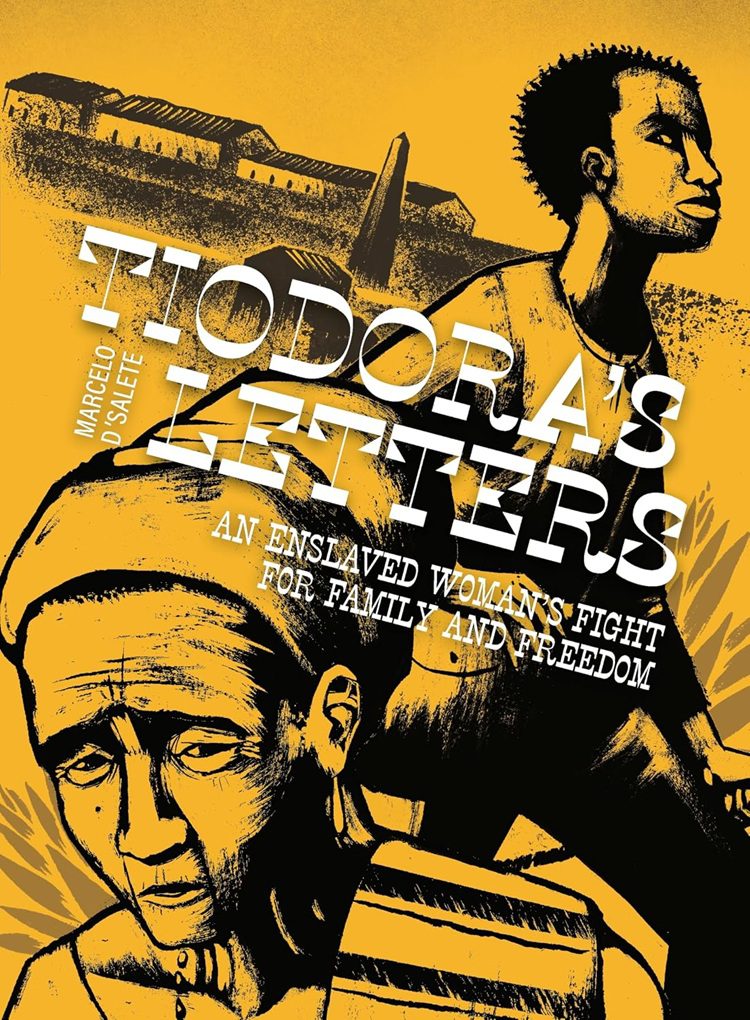
Buy Tiodora’s LettersBased on a really grim part of Brazil’s history of slavery and inspired by the devastating true story of Tiodora da Cunha Dias, an enslaved Congolese woman in 19th-century Brazil, Marcelo D’Salete’s new graphic novel Tiodora’s Letters: An Enslaved Woman’s Fight for Family and Freedom gorgeously attempts to tell her story of resilience, determination, and desperation to reunite with her husband and son through her letters that she tried (and unfortunately failed) to get to them.
Tio (short name for Tiodora) isn’t the main character. Instead, it is Bene, a teenage boy who can read and write, who helps her try to get at least one of her letters to their destination. It sounds easy, but the journey is anything but. Bene’s quest is paved with danger, having to deal with racism and violence, but with a little hope and help from generous people who gave him food, and the guidance of Tio’s son Inocencio, he was able to at least try.
It’s a simple narrative, but the way that D’Salete illustrates it is extraordinary. He has meticulous attention to detail as the characters in the book come to life through charcoal. There are panels without words, but in this case, sometimes actions and emotions speak louder than words. You get the sense of danger and risk infused into every frame from beginning to end. D’Salete is also gracious enough to include photos, references, and notes to help the reader get an even broader sense of the overall story.
D’Salete definitely did his research and the fact he decided to make into a graphic novel was a really great idea. Since young people love to read graphic novels, I hope that they find this one and take it seriously. I think it’s an important historical lesson which I had the immense privilege of reading. D’Salete really does Tiodora and her story some justice.
