
Let me make one thing quite clear. I’m one of the many aging people who are not going deaf, dammit – people just don’t enunciate!
Ahem.
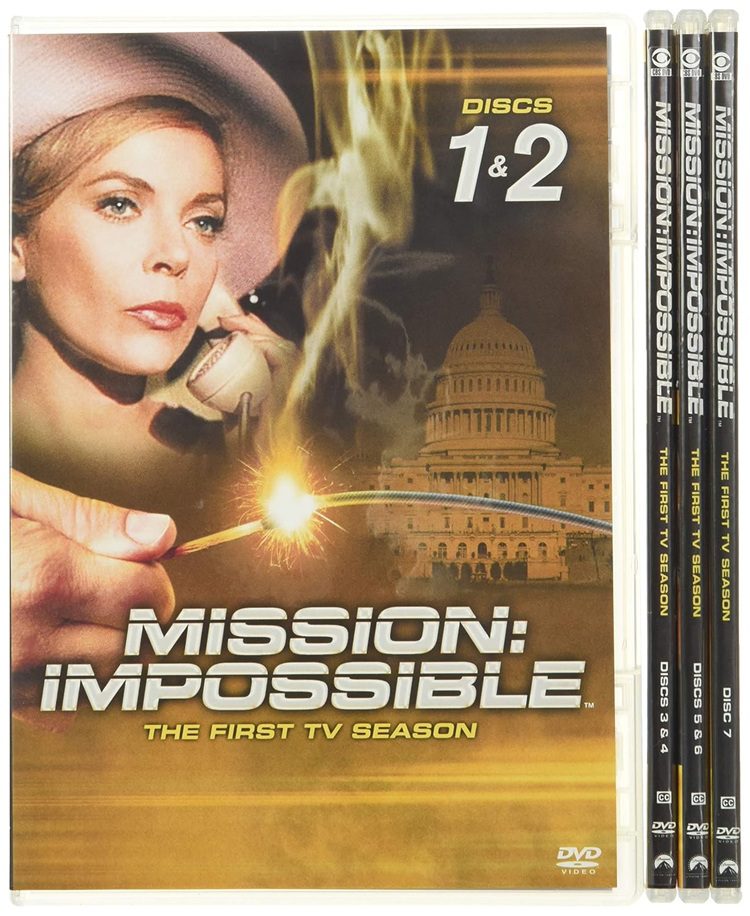
The long and the short of it is that increasingly, I’m relying on closed captioning when I’m watching TV. It’s been particularly helpful for old episodes of Mission:Impossible, especially when the cast assumes foreign accents as part of their weekly sting operation against the designated baddies.
Buy Mission: Impossible – The Complete First TV SeasonThere’s a Spanish-ish accent for all the Caribbean and Latin American dictators, gunrunners and drug dealers; there’s also a vaguely Eastern European accent for all the many Cold War plots (the show debuted in 1966, just a few weeks after the original Star Trek launched. and was produced at the same studio, Desilu). There are also a few flavors of All-Purpose Asian, meant to signify (along with yellowface makeup for the inevitably non-Asian actors speaking the words) anyone from Singapore to Outer Mongolia.
One of the amusing side effects of having the CC on are the bracketed descriptions of sound effects and music it provides for people who really can’t hear anything. But in an audio version of “Does the carpet match the drapes?”, there’s an inevitable paucity of language to adequately describe music. There are also a few punny funnies: I first became interested in Music Descriptor Mad Libs when watching The Crown. In order to keep up with the lockjawed Brits, I had the CC on and would see the music description:
[Stirring music]
This would inevitably bring to mind an image of Claire Foy or Olivia Colman standing up straight like the queens they are, both hands on a long wooden spoon, slowly and rhythmically stirring a big cauldron of soup: “Stirring music: Music to stir by.”
Of course, the use of music for episodic TV is less about music for music’s sake and more about setting a mood or indicating action. Fans of Star Trek:TOS will know there’s a fight going on when they hear the horn-heavy: Da da daaaaa daaaa daaaa daaaaaa daaa da da daa duh, or that someone has caught sight of an old love when that sappy flute tune is heard, which happens approximately 800 times during the planet of the spores episode, “This Side of Paradise,” where Spock falls in love with Jill Ireland and beats up Shatner. But I digress.)
Some sample music descriptors from a recent M/I episode:
[tense but upbeat]
[militant percussive music]
[tense orchestra music]
[pensive orchestra music] (more thoughtful than “tense orchestra music”?)
[dramatic theme music] – that bongo-heavy Lalo Schifrin theme that accompanies the burning fuse imagery of the show’s credits.
In these cases, the descriptors are indications of what function the music is playing in the scene. There aren’t any big surprises for a basically straightforward drama series like M:I; i.e. the music is tense when the scene is tense. In other contexts, you could imagine music being used for counterpoint (maybe sprightly, happy music for a gruesome murder, or slow, lugubrious music for a party scene) or for humor, but that’s hard to translate into a short descriptor.
Then there are the really bare-bones descriptors (some closed captioning is done on the cheap, probably with hinky AI or outdated transcription programs). I’ve seen one description that simply said:
[music]
So if you can’t hear at all, this becomes a choose-your-own-soundtrack adventure. Maybe one of the few benefits of going stone deaf will be the opportunity to essentially become the music supervisor for all your TV watching.
