
You can just feel the excitement for the move.
Pop Culture Ephemera
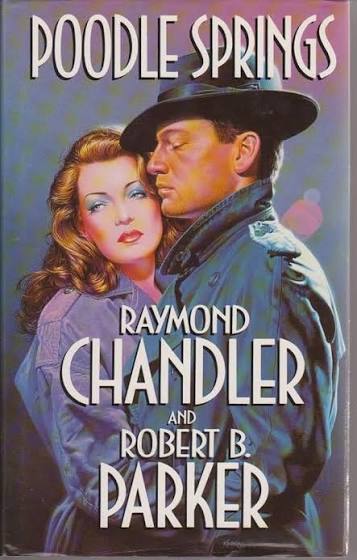
- Raymond Chandler and Robert B. Parker – Poodle Springs (1989) (Published by Putnam): “Hollywood Boulevard looked like it always did in the morning, like a hooker with her make-up off.” They call this the eighth Philip Marlowe novel. I would put a double quote around that. Chandler completed four chapters in 1959 and Robert B. Parker finished the novel in 1989. The big question is always going to be, how does Parker do mimicking Chandler’s voice. The comparison is a moot because the Chandler chapters are not up to his usual standards. Marlowe’s voice is not a smart ass and the observations aren’t as tight as earlier novels. Parker picks up on the vibe of those first chapters and finishes it very respectably.
Marlowe has married Linda Loring, wealthy daughter of even wealthier father, from The Long Goodbye (1953) and Playback (1958). The majority of the story is about Marlowe dealing with being a “kept man” in Poodle Springs (a funny fill-in for Palm Springs). His decision to return to be a P.I. in Los Angeles puts his marriage at risk. The investigation elements of the story become secondary (it involves a disappearance of a gambler who owes a casino $100,000 that leads to crooked doctors and pornography), but it’s where Parker excels at keeping it more logical than most Chandler plots. I don’t know that this was enough of a sampling to convince me to read a Parker “Spenser” novel, but I may check out some other writings of his now that I’m running out of Chandler.
- The Pitt – “7:00pm” (HBO) (S.1 E.13) (2025): “And I’m gonna remember Leah long after you’ve forgotten her.” – Dr. Robby. For such an intense drama, if you are always at a 10, the 10 becomes the default setting and there’s not another level to go. The shooting at Pitt Fest just made the drama faster instead of more intense. This episode was the best of the season so far because it showed off an emotional intensity that was lacking with all of the medical drama. Robby (Noah Wylie) does not want to give up on saving the life of his stepson’s girlfriend. The emotional impact on him plays nicely against the maturation of the young doctors in the face of the emergency. Slowing down the casualties helps let the emotions catch up. This is where the show finally felt like what I loved most about E.R. during its best episodes. I’m hoping this pays off over the next two hours that end the season.
- Brothers Johnson – “Strawberry Letter 23” (from Right on Time) (1977): “All through the morning rain I gaze, the sun doesn’t shine / Rainbows and waterfalls run through my mind” I often see this classified as Psychedelic Soul Funk. I guess that’s because of the lyrics, but this Quincy Jones-produced song slaps, as the kids say. By “slaps,” I mean that Louis Johnson bassline. George Johnson would typically play lead guitar, but that memorable phase shifted solo at the end of the song was played by Lee Ritenour. Working with Quincy Jones would payoff with Louis Johnson playing bass on Michael Jackson’s Thriller sessions, including “Billie Jean.” I have loved this song for as long as I can remember, but it was brought back to my life thanks to Tarantino in both Pulp Fiction (1994) and Jackie Brown (1997).
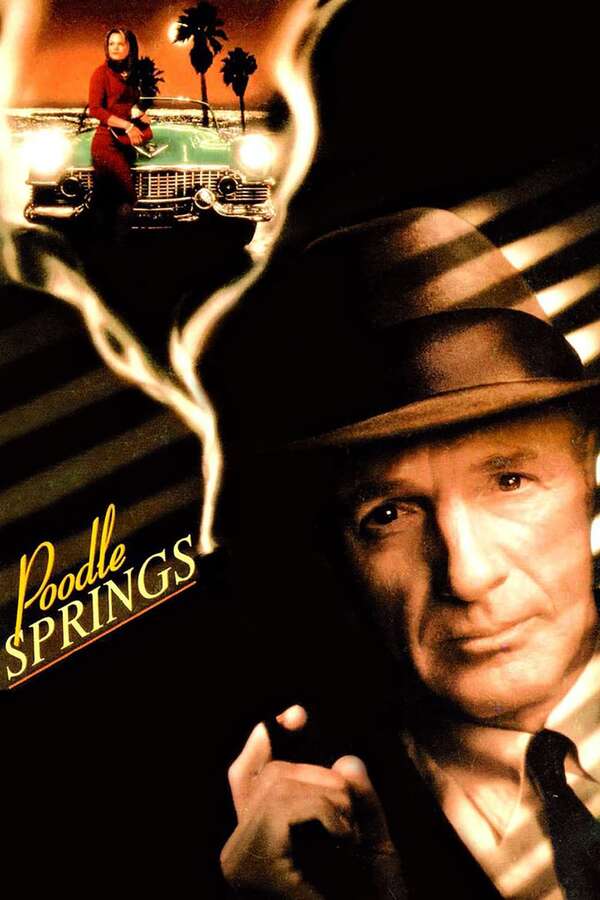
- Poodle Springs (1998) (Directed by Bob Rafelson): “I find work that fits what I do. I get a hundred dollars a day. I can’t be bought or pushed. Not even for love” – Marlowe. The pedigree is above par on this one. Director Bob Rafelson knows his way around noir films, The Postman Always Rings Twice (1981) and Black Widow (1987). James Caan plays an aging Phillip Marlowe. Playwright Tom Stoddard adapted the Raymond Chandler novel that was finished by Robert B. Parker. On paper, it should be a masterpiece. It’s not.
The film keeps just enough of the plot to feel like it’s a good adaptation, but leaves out just enough to lose any suspense or feeling of danger. The main theme of Marlowe feeling trapped by marriage and having to decide his future as an aging detective is mostly intact. Moving more of the action to Poodle Springs (more obviously Palm Springs in the film) takes away some of the best parts of the book as Marlowe describes the old neighborhood. It ends up feeling too much like the pilot for an HBO series of films instead of the quality we see in HBO films today. I’m mostly disappointed that it isn’t on the level of The Long Goodbye (1973) or The Big Sleep (1946). Instead it’s just passable, much like the book.
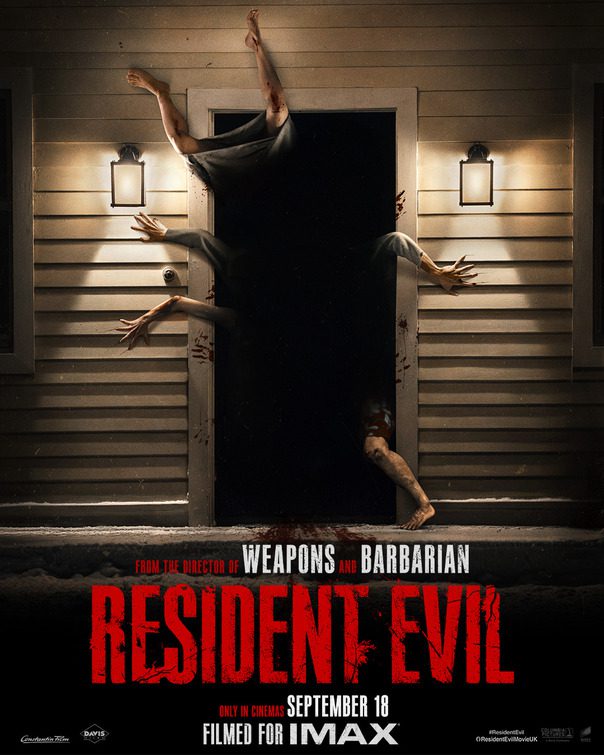
- Resident Evil (2026) (Directed by Zach Cregger): “Anybody order a kidney or liver, whatever this is? Anybody? It seems like it’s kinda important!” – Bryan. Other than a Comic Con panel on one of the previous adaptations, this is my first encounter with the Resident Evil universe. What I learned in the hallway after the movie from listening to some younger guys talking (respect the source) was that this film doesn’t exactly adapt one of the video games. The experience of the film leaves no doubt that there’s a videogame influence, including some brilliant first-person shooter scenes. The identity of the film is hard to put your finger on in retrospect. A horror film with some humor is a ticket to cult status – think Evil Dead. A comedy with some horror is a fine line that has only a few, like Shaun of the Dead, and a graveyard of failures. Zach Cregger kept the focus on the horror and Austin Abrams (Weapons) is probably the reason you will either love or hate this film. His deadpan humor feels like a younger, modern day version of Bruce Campbell. The film is divided into missions, like a video game, each chapter gets harder villains to conquer. It’s a hard year to stand out in the horror genre. This is a sleek presentation that feels like it will find a good home among horror and videogame horror fans.
Best of the Rest
- Shuggie Otis is the writer and original performer of “Strawberry Letter 23” back in 1971 on his Freedom Flight album. From 1969-1974, Shuggie looked like a prototype for a Prince type of artist. He was writing interesting funk and psychedelic songs and playing all the instruments on his third album. He would tire of the industry and disappear for decades. Before his departure, the Rolling Stones asked him to replace Mick Taylor on their world tour.
- The one thing you could always count on from DJ Quik was good sample choices mixed with live instrumentation. The title song off of his Safe + Sound (1995) took the Brother Johnson version of “Strawberry Letter 23” and turned it into another G-Funk classic. He’s always been on par with some of the best West Coast rappers for me. This beat would make Dr. Dre proud.
- Eminem let Dr. Dre take his own shot at the Brothers Johnson “Strawberry Letter 23” on the final track of his Encore (2004) album. This was the best song on a relatively mediocre album, although this song with 50 Cent along for the fun of it made enough fans to be nominated for a Grammy for Best Rap Performance by a Duo or Group. I still include it on workout mixes.
Sunday Morning Tuneage Flashback
- Sunday Morning Tuneage from 10/3/2010, it was football and all football on our weekends from Thursday through Sunday. Christian lost, Caleb tied, and North Texas lost at home on a missed extra point. I thought that Fringe (FOX) was off to a wonderful start, Boardwalk Empire (HBO) was already my pick for best new show of the year, and I thought the most underrated was Bored To Death (HBO). My list probably hasn’t changed too much, but there are more entries to consider. (Edit: Not a film post-1999 on the new version)
My #46 Top TV Show of All-Time was Invasion (ABC) (2005-2006): The plot was very easy to understand. Under the cover of a powerful and destructive hurricane, aliens arrive in Southern Florida. It’s essentially a long-form telling of Invasion of the Body Snatchers, but it felt fresh and different. The actors were well cast, especially William Fichtner and Eddie Cibrian. Plotted as a five-season story, the first bad luck was that it premiered just after Hurricane Katrina hit the United States. A little spooked, ABC pulled all references to the hurricane in the advertising, taking away one of the key elements that attracted me to the story. I’m not the only one disappointed that this Shaun Cassidy-created series was not given another season. It often shows up on the “Cancelled Too Soon” lists. It also marks a time that I started to disengage with network shows for fear they wouldn’t get to tell their whole story. - BEST STEVE MARTIN MOVIES OF ALL-TIME (2010)
- 10. All of Me (1984)
- 9. Roxanne (1987)
- 8. L.A. Story (1991)
- 7. The Man with Two Brains (1983)
- 6. Dead Men Don’t Wear Plaid (1982)
- 5. The Spanish Prisoner (1997)
- 4. Dirty Rotten Scoundrels (1988)
- 3. The Lonely Guy (1984)
- 2. Planes, Trains & Automobiles (1987)
- 1. The Jerk (1979)
- BEST STEVE MARTIN MOVIES OF ALL-TIME (2026)
- 10. Bowfinger (1999): I’ve only recently learned to think of this as more than just an Eddie Murphy vehicle, but Steve is an excellent companion who has plenty of comedic lines himself. I have to remind myself that Martin also wrote the script.
- 9. Roxanne (1987): Also written by Martin, I feel like it’s on the verge of greatness that it never attains. Owing too much to Cyrano de Bergerac, the film can’t allow itself to break those bonds. It’s charming, but I don’t watch it often.
- 8. L.A. Story (1991): Written by Martin, the best parts are his insights and parodies of life in Southern California. Much like his films of this era, he finds the right balance of comedy and pathos that is missing in so many films today.
- 7. Parenthood (1989): Directed by Ron Howard. It’s not groundbreaking or especially zany. It’s what I expected of a Steve Martin film in this era; a solid comedy that the whole family could enjoy. The ensemble cast was a little too much for a single film and probably holds it back from being a higher rank.
- 6. Dead Men Don’t Wear Plaid (1982): Directed by Carl Reiner. It is a better film now that I know the Hollywood noir references. You don’t have to know them all to appreciate the seamless blending of classic scenes into the film in the pre-CGI days.
- 5. The Lonely Guy (1984): Directed by Arthur Hiller. Teaming Charles Grodin and Martin produced one of the driest humor films of the decade. It’s a definite “love it or hate it” film where people don’t often fall in between. I am of the “love it” category. I was probably the right age (a Junior in High School) to appreciate some of the just plain weirdness of this film. I need a rewatch soon.
- 4. All of Me (1984): Directed by Carl Reiner. It was the fourth and final time the two would work together. Lily Tomlin is one of my favorite comedic actresses, but this film gets this ranking for Martin’s incredible physical comedy. Don’t forget, it’s the first place I can recall hearing the term “Energy Vampire.”
- 3. The Man with Two Brains (1983): Also directed by Carl Reiner. This doesn’t get enough credit for all of the memorable lines. If nothing else if gave us “Oh Pointy birds. Oh Pointy pointy. Anoint my head. Anoity anoity.”
- 2. Planes, Trains & Automobiles (1987): Director John Hughes knew he had magic in the pairing of John Candy and Steve Martin. It’s hilarious and touching and it plays in most scenes like a Classic Hollywood buddy picture. The film warned us that “those aren’t pillows” and it gave us one of the most heartbreaking final scenes of any comedy.
- 1. The Jerk (1979): Directed by Carl Reiner and Martin’s first feature film. He melded his stand-up with his popular Saturday Night Live (NBC) appearances to create the brilliant Navin Johnson. From 1979-1985, my friend group quoted this film more than any other. What other film taught you that some people hate cans, it’s exciting to get the new phone book, to love to pick out a new thermos, and you should always bring your trumpet to the beach.
1976 in Review
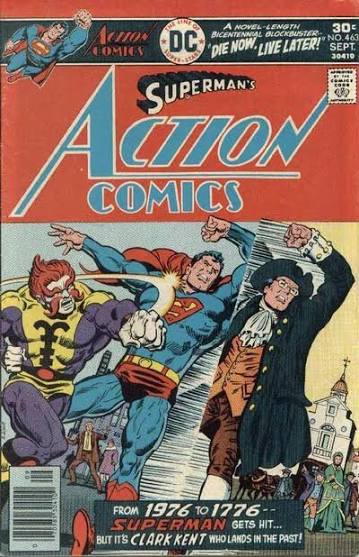
- September – Action Comics #463 (DC Comics): “The father of our country will know how to deal with that trio of Tory spies!” – Superman. Cover by Bob Oksner. Written by Cary Bates. Art by Curt Swan. Clark Kent wakes up in 1776 as a reporter of the Pennsylvania Gazette for Benjamin Franklin. Of course, it’s a psy op, but we don’t discover that until Clark has a chance to interact with the heroes of the Revolutionary War. DC Comics was all about making a buck off of the Bicentennial.
- September 28 – Muhammad Ali and Ken Norton were 1-1 in their first two fights. They would meet for the third time at Yankee Stadium in front of 30,000 fans. Ali would win 8 of the 15 rounds on the judge’s cards to retain the Heavyweight Championship.
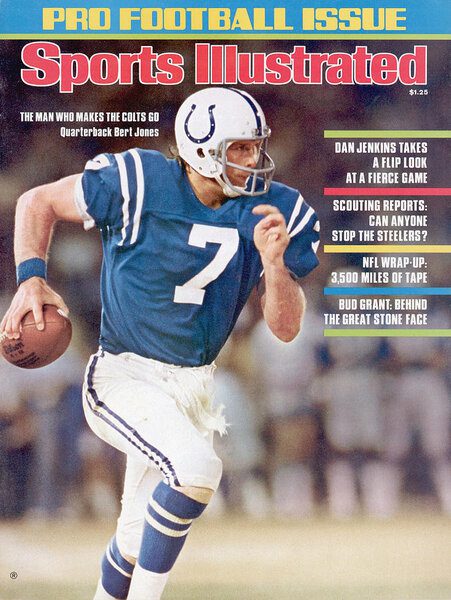
- September 13 – Sports Illustrated. Cover player, Bert Jones, would lead the Baltimore Colts to an 11-3 record with the best season of his career and one of the best of the decade. Jones would throw for 24 touchdowns and over 3000 yards. They would lose in the Divisional Round to the Oakland Raiders by a disappointing 40-14. The Ruston Rifle would be awarded the NFL MVP award for his season.
What the Hell Did I Put in My Mouth?
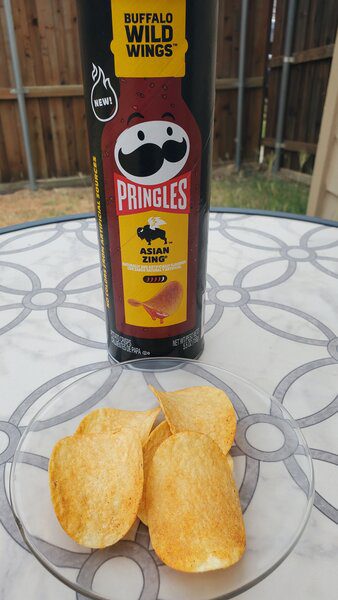
Pringles: Buffalo Wild Wings – Asian Zing
I wasn’t sure about the three Buffalo Wild Wings collaborations. I have been burned lately by Pringles releases that sound good on paper and just disappoint in practice. They might be forgiven for the past year of poor flavor releases after this one. It is just what I had hoped for with a generous amount of ginger, that soy-sauce saltiness, and a little heat to finish. Thumbs up, Pringles.
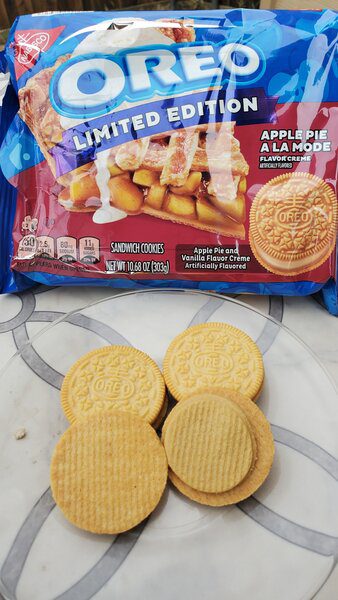
Oreo: Apple Pie A La Mode
The 2025 favorite makes a 2026 return. It was the best non-chocolate-based Oreo release of last year. It was the best-smelling Oreo release of last year. That scent of apple pie with vanilla ice cream punches you right in the face when you open the package. They didn’t vary from last year’s flavor. The packaging is a step up. Hurry and get these before they disappear off the shelves.
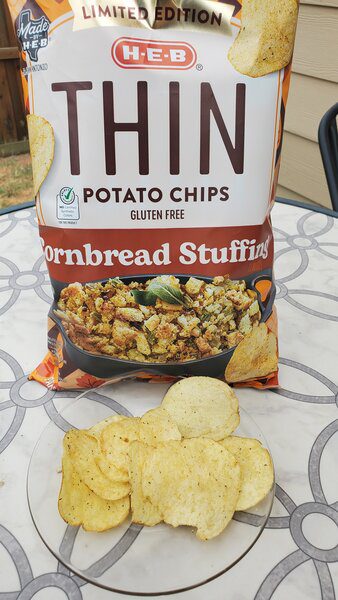
H-E-B: Cornbread Stuffing Thin Potato Chips
The good folks at H-E-B usually have a Ridged Holiday Stuffing chip release this time of year. For 2026, they have flipped to a thin potato chip, which I don’t usually support. I am making an exception in 2026 for this Cornbread Stuffing. I am guessing that they couldn’t license Stove Top Stuffing, but that’s exactly the flavor profile I’m getting in this release. It might come across as a little salty for some, but there’s no mistaking the boxed stuffing flavors. We still have a month to go until Halloween, but this Thanksgiving flavor is outrageously addictive.
“If you arrive and don’t see me
I’m going to be with my baby
I’m free, flying in her arms
Over the sea” – Brothers Johnson
