
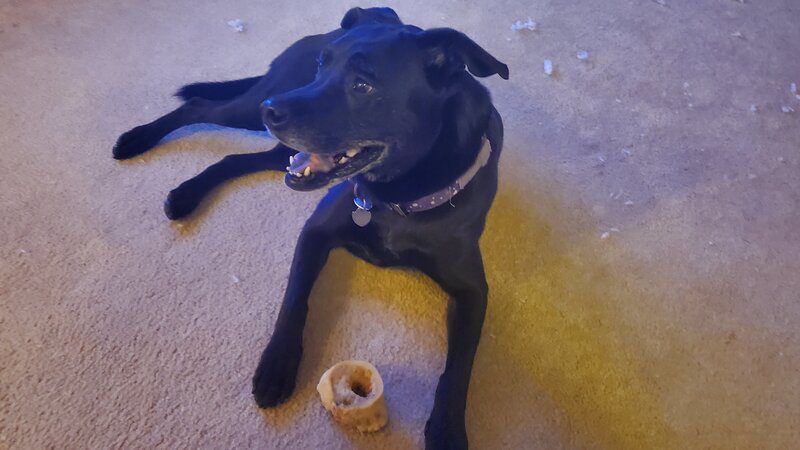
A bone and a football game = perfection.
Pop Culture Ephemera
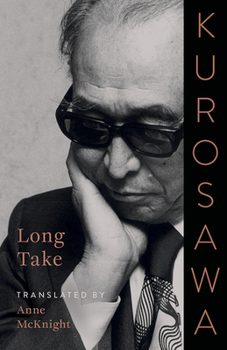
- Akira Kurosawa – Long Take (2026) (Published by Univ. of Minnesota Press): “You can’t just stay feeling sad forever. Anyway, you have to get things done for those who are living.” I have Kurosawa’s Something Like an Autobiography (1981) on my bookshelf. I should have read that before this collection of essays. That previous title left off after the release of Rashomon (1950). Most of this collection of essays concentrates around Seven Samurai (1954) and then leaps forward to discuss his thoughts on his last few films, most centering around Dreams (1990). This is a quick 240-page read. Most of the essays read like something I would get in the booklet with a Criterion release of the films. Kurosawa loves his troupe and his observations revolve around compliments of the hard work that his crew did on the films. He is not one to congratulate himself. I don’t feel like I learned much about the films of his later era, as much as I got the sense of his connection to the film world at large. There’s a reason I did my project of Kurosawa films after completing a majority of my John Ford project. Akira’s love for Ford is clear in multiple entries here. The best thing about this book is the annotated list of Kurosawa’s Top 100 films, essentially what he would program if he owned his own theater. Choosing an equal amount per decade, this gives me another future list to complete. I have respect for a man that has D.W. Griffith and Beat Takeshi on the same list. This gives me an extra push to get my Kurosawa Project a jump start.
- The Bionic Woman – “Ghosthunter” (ABC) (S.1 E.14) (1976): “You are going to do some bionic snooping, my dear.” – Oscar Goldman. The first season comes to a conclusion with this interesting departure from the spy and espionage episodes of the season. Written and directed by show creator Kenneth Johnson, the story takes Jaime Sommers to a town, Essexville, near Salem to protect a government project being threatened by a ghost. The episode appealed to me mostly to see Kristi McNichol as the possibly possessed daughter. Unfortunately, she was out of her element in this genre episode. It has elements of The Exorcist (1973) and Carrie (1976) that are fun, and they hint that the show is willing to push beyond the normal spy elements. That will become clear when the next season opens with Jaime battling Bigfoot. This episode might have been my favorite of the first season if it wasn’t for an extended scene where Jaime is terrorized by a log while in a canoe, mostly filmed from the log POV.
- Willie Nelson – “Good Hearted Woman” (from The Words Don’t Fit the Picture) (1972): “She just talks about the good times they’ve had / And all the good times to come.” Willie and Waylon were the Lennon/McCartney of the Outlaw Country movement in the ’70s. Nelson and Jennings share songwriting credit, although it’s said that Nelson only wrote about two lines of the song. Waylon agreed to a 50/50 split anyways. The song about the love for a woman staying loyal to a man who likes to stay out on the town was influenced by a story that Waylon read about Tina Turner who was described as singing songs about “good hearted women loving good timing men.” Years later, Tina would cover the song to bring it full circle.
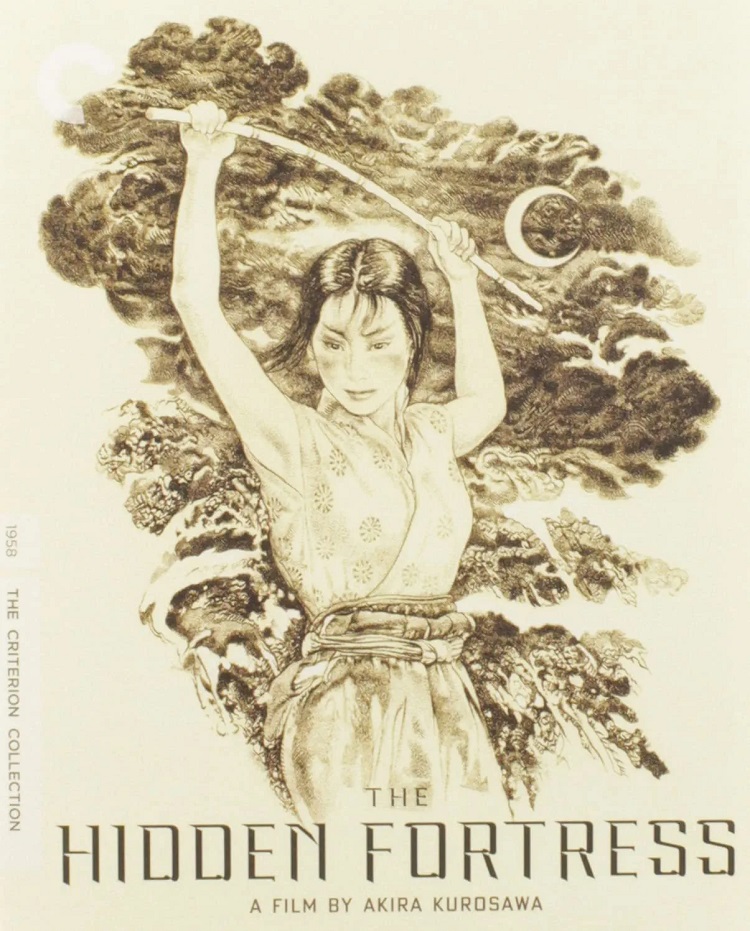
- The Hidden Fortress (1958) (Directed by Akira Kurosawa): “Hide a stone among stones and a man among men.” – General Makabe. I’m going to forgo the comparisons to Star Wars (1977) because there’s not much new to observe there. I watched this as part of my Kurosawa Project. Watching them in order for the first time gives some perspective to his progression as a director. His previous film, The Lower Depths (1957), was a heavy drama about the lower class. As was his tradition, every other film would be a historical samurai drama. This one offers a much lighter tone, although it manages to say much about class. The story is viewed through the eyes of two peasants, Tahei and Matashichi. They failed to make a profit during the war but returning home they encounter General Makabe (Toshiro Mifune) and Princess Yuki (Misa Uehara). It’s remarkable for being his first foray into Tohoscope. The wider ratio allows Kurosawa the ability to draw triangles between the characters, even on far ends of the screen. It’s a technique he shared with the Hitchcock films of the day. I have reassessed my claim that new viewers should start with Seven Samurai (1954). This is a very accessible film for modern viewers. If you aren’t entertained by this, don’t bother with the rest of his films.
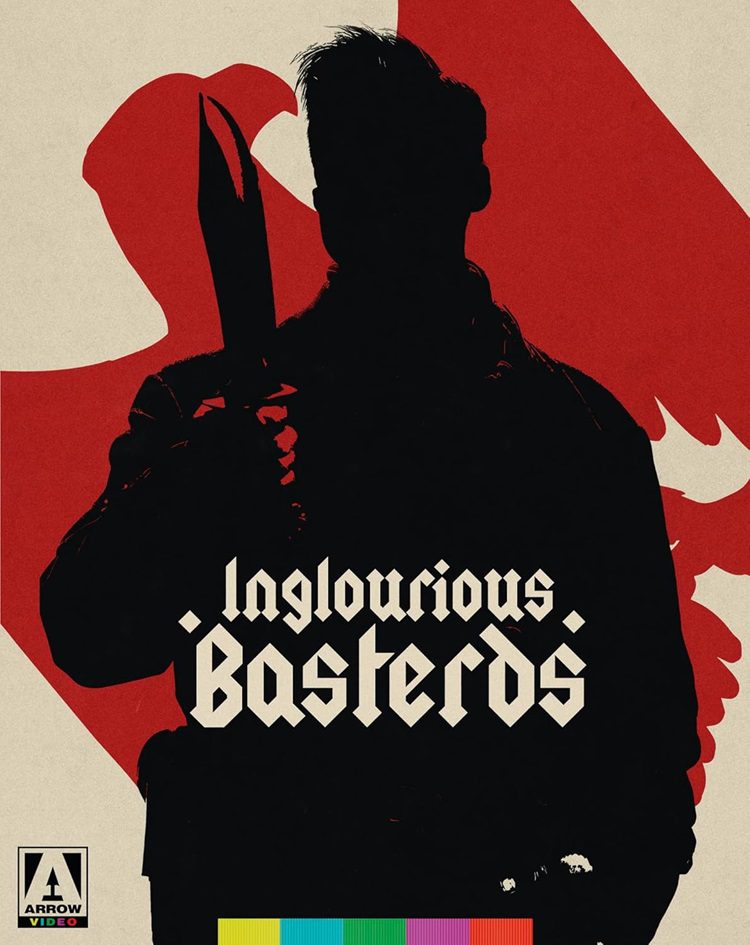
- Inglorious Basterds (2009) (Directed by Quentin Tarantino): “And once we’re in enemy territory, as a bushwhackin’ guerrilla army, we’re gonna be doin’ one thing and one thing only… killin’ Nazis.” – Lt. Aldo Raine. Coming in at #14 in The New York Times Best Films of the Century, I am ashamed to admit that this is my first viewing of the film. I’ve seen his crime film, his Western, his exploitation film, his gang film, his late-’60s tribute, but not his war movie. The problem with a Tarantino film is that a single viewing is like the first potato chip; you’re just getting the flavor, but it will take a few more to really know if you like it or not. The flavor mix here is pure Tarantino. What sounds like it should be a version of The Dirty Dozen (1967) on paper, is much more influenced by the string of WWII films that came after that in the early ’70s. The European setting allows him to explore some of the French New Wave influences from that same period. The film revolves around the hero (Brad Pitt), the Nazi (Christoph Walz) and the girl (Melanie Laurent). All are cast well, but I’m still quoting almost every Brad Pitt line from the film in my head. This is worth at least two more rewatches to determine if it ranks as high as the NYT put it, and I’d love to see it hit the big screen around me to really judge it.
Best of the Rest
- Both Willie Nelson and Waylon Jennings released their own versions of “Good Hearted Woman” in 1972. I was much more familiar with the Willie version for years, but Waylon gives the better, sped-up, Honky Tonk version of the song.
- The song is only slightly different when each artist, Waylon and Willie, sing “Good Hearted Woman.” Together it’s magic. They best of both of their talents on display. Willie is a little too chill on his version, he benefits from the uptempo of Waylon’s version. The “live” is a studio invention. Waylon’s version from his 1976 Live album is used with Willie’s vocals mixed in pretty seamlessly. This version is my favorite even though I lived with the other two versions for decades before I recall hearing this one.
- Tina Turner was the influence for “Good Hearted Woman.” She originally recorded her cover of it in 1974. That solo album was shelved, and it would eventually get released in 1979. It’s not that crazy to think of Tina Turner doing Outlaw Country songs. Tina has lived the life that few country vocalists can equal. Her voice is strong and unique, in the same way that you know a Dolly Parton song immediately. This wasn’t written for Tina, just about her. The cover needed one more time through production so it didn’t sound like she was screaming to stay above the guitar. Now, if they could have gotten Tina, Willie and Waylon to do the song together . . .
Sunday Morning Tuneage Flashback
- Sunday Morning Tuneage from 9/26/2010, it was my third time running in the Little Elm Autumn Fest 5K. I had that stress fracture in my foot for a couple of weeks, but I managed to shave a minute off my best time. Christian finished 3rd in his age group and Caleb did respectable at the mile run. I was happy about the return of Parenthood (NBC) and Community (NBC). I was excited for the debut of the David Cross starring show, The Increasingly Poor Decisions of Todd Margaret (IFC) which ended up being hilarious and is hardly thought of today. My list for the week was made at a time when I was more involved in the activity, I can only think of some slight adjustments to go through it again.
My #47 Top TV Show of All-Time was Buffalo Bill (NBC) (1983-1984): The biggest debate when making this list is how many episodes should a show have to qualify for the list. I feel better about the inclusion of this show when I see it was 26 episodes over two seasons. Starring Dabney Coleman as a irredeemable local talk show host, with a strong supporting cast of Max Wright, Geena Davis and Joanna Cassidy who try to deal with his shenanigans, this show was groundbreaking. We later get The Slap Maxwell Story (ABC) (very similar setup) and The Larry Sanders Show (HBO) which itself influenced so many shows as the descendants of this show. I used to catch repeats ever so often on Trio, but I need to evaluate this show again soon. - BEST CARD GAMES OF ALL-TIME (2010)
- 10. Rook
- 9. Apples to Apples
- 8. Mille Bornes
- 7. Spades
- 6. Gin or Rummy or Gin Rummy
- 5. Uno
- 4. Hearts
- 3. Poker
- 2. Cribbage
- 1. Euchre
- BEST CARD GAMES OF ALL-TIME (2026)
- 10. Apples to Apples: I’ll include this because it has a short time enjoyment for me. I never pick it, but if someone else does, I’ll play along. It’s a game that should always have a 30-minute time limit.
- 9. Poker (Texas Hold ‘Em): This seems to be the current-day definitive version of the game. I guess it gives the best betting potentials. I don’t play anywhere near what I did with my roommates in college. My father is great at it, but I think I didn’t inherit the same talents.
- 8. Rummy or Gin or Gin Rummy: I’m going to label it what I did back in 2010. I know there are variations of Rummy as the parent nomenclature for these types of games with runs. I don’t know that I’ve played actual Gin Rummy in years as much as so many other games use similar strategies.
- 7. Fluxx: As the children got older, I was able to enjoy these games that were a little more complex. My children still lean into games like this one. It’s not strategy as much as memory, as the rules keep changing at the drop of a hat and you need to keep up to win. As much as Apple to Apples, this has given us quite a few family laughs.
- 6. Uno: It’s the next step for children after Old Maid or similar in the card-game genre. Simple to learn and a decent amount of strategy to make it fun for adults too. I don’t think it’s been necessary to trick up the game as has been done the past few years. It’s a good base game that plays an important role in strategy for younger players.
- 5. Spades: There’s more strategy to this game than others on the list. It’s difficult because if you don’t know the strategy that your partner is going to employ, you can ruin the game quickly. I enjoy this game, but I haven’t put in the hours to be good at it.
- 4. Hearts: I love that this game is about not winning the trick, unless you want to try to win ALL of the tricks. This was also a game that was heavily played in college.
- 3. Five Crowns: It’s essentially in the Rummy family. It takes a little longer than the average card game, but it’s easy for the family to play at holidays while we all have some snacks, drinks or dessert. We are on a second set because we’ve played so much at family events.
- 2. Euchre: It’s the game that you learned your first weekend at University when I started college. It’s one of the better games to play while drinking. The ease of playing almost anywhere is important also. Having a consistent partner can give you a huge advantage. My proud Dad moment was explaining it to young teen Christian during a car trip and when we got to our destination, he had already developed a decent strategy.
- 1. Cribbage: It’s a fun game with moderate to advanced strategy. Some of the beautiful boards that I’ve seen add to my interest outside of the game play. The fact that my Nana patiently taught me when I was young is honestly probably why it stands out among all the others on this list.
Some brief qualifiers here in case you are wondering. Cribbage qualifies because the board is just a scorekeeper and not involved in the strategy. Tripoley did not qualify because the board seemed too integral to the play of the game. I’ve left off one of the most influential of all-time in Bridge, because I don’t know how to play. I’ve left off one of the most influential of this century, Magic: The Gathering, only because I don’t know all of the ways to play. I left off Solitaire because of the lack of competition against another person aspect to it.
1976 in Review
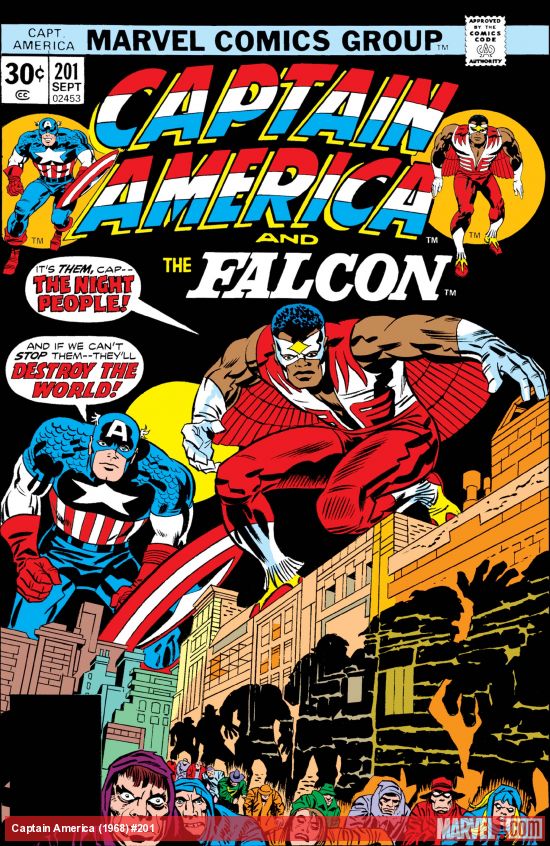
- September – Captain America #201 (Marvel Comics): “That is no way to treat a brother — Brother!” – The Falcon. Written, cover, and art by Jack Kirby. The King writes an odd standalone called “The Night People!” that takes Cap and the Falcon to Mason City, TX to find a bad guy, Brother Texas. It’s not common for Captain America to deal in horror tropes, and maybe that’s why it feels a little off.
- September 17 – The first Space Shuttle was rolled out for public viewing in Palmdale, CA. It was named Enterprise by President Ford, even though NASA had meant to call it Constitution. It would never fly into space, and it was used for parts for other shuttles.
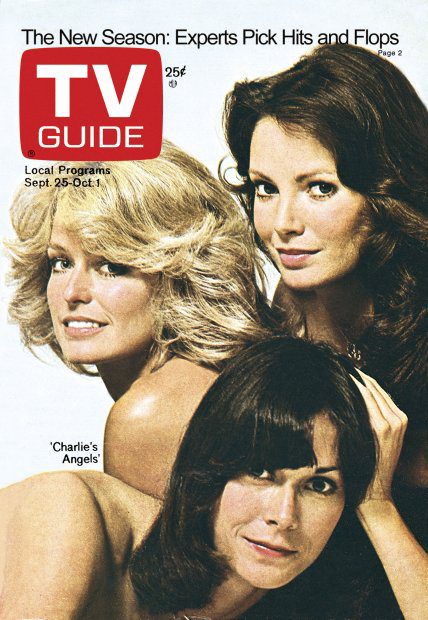
- Sept. 25 – TV Guide. The new season was underway. Charlie’s Angels (ABC) was a hit from the start. It would debut on September 22, 1976. In March, the pilot movie had received a 56 share, guaranteeing a series pickup. The famous Farrah poster was released in the Summer of 1976. The show would finish as the #5 rated series of the 1976-1977 season. Despite that success, Farrah would leave the show after just the first 22 episodes.
What the Hell Did I Put in My Mouth?
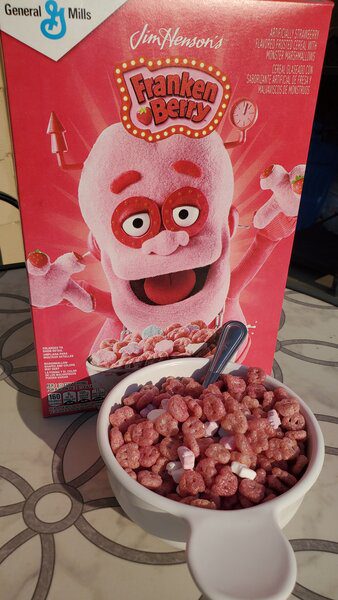
Franken Berry (2026)
I already have this ranked as my third favorite of the releases. The Jim Henson treatment is fun, but there’s some personality missing that is present in the other two. The reason this remained a favorite was the bright colors. I know we are all getting healthy again or something like that, but they’ve taken the heart out of this cereal with a dull effort in the coloring. I don’t see a “no artificial colors” notification on the box, but you don’t have to be a Yummy Mummy to see that these aren’t what they used to be.
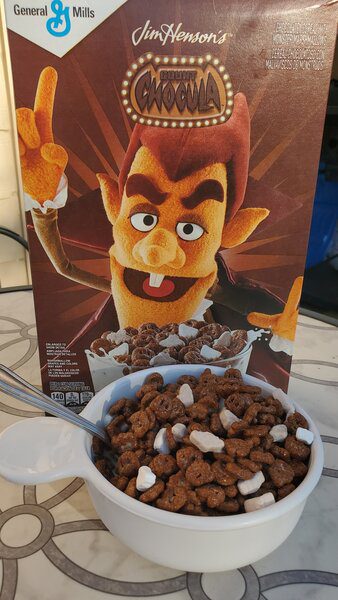
Count Chocula (2026)
The original and still the champion. i may look forward to the Boo Berry each year, but if there was a lifetime tally, this is the Monster Cereal that I’ve had the most. It might be over 100 every day here still, but this box gives me hope that we’re into Halloween season. Franken Berry got the fuzzy box treatment last year. There will be limited edition fuzzy versions of Count Chocula, but I don’t have hope to find them. The flavor and look is still what I remember. The marshmallow ratio remains perfect, and the chocolate milk left behind is on par or better than Cocoa Puffs.
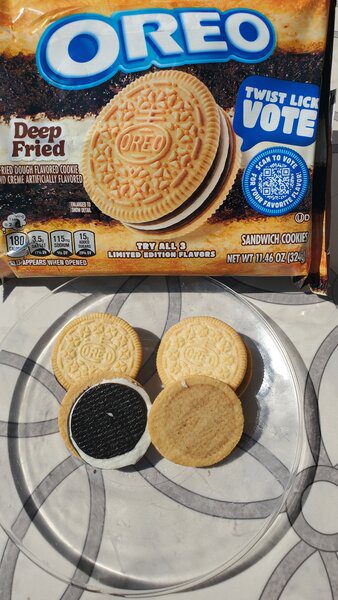
Oreo: Deep Fried
The second of the three Oreo flavors this Fall is called Deep Fried. I think it’s supposed to mimic a fair staple like funnel cake. Actually, I’m not sure if that’s the case because they are purposely vague on the packaging. They do have Deep Fried Oreos at the fair, but that might be too meta to have an Oreo trying to taste like a warm Oreo. There’s a buttery and greasy taste to them, but neither in a way that leads me to taste warm dough out of the fryer. I fear that warming these up would quickly devolve into a gooey mess. This isn’t one of my favorite Oreo releases in recent memory.
“She loves me in spite of my wicked ways that she don’t understand
Through teardrops and laughter
They’ll pass through this world hand in hand, Lord
A good hearted woman lovin’ a good timin’ man” – Willie Nelson
