
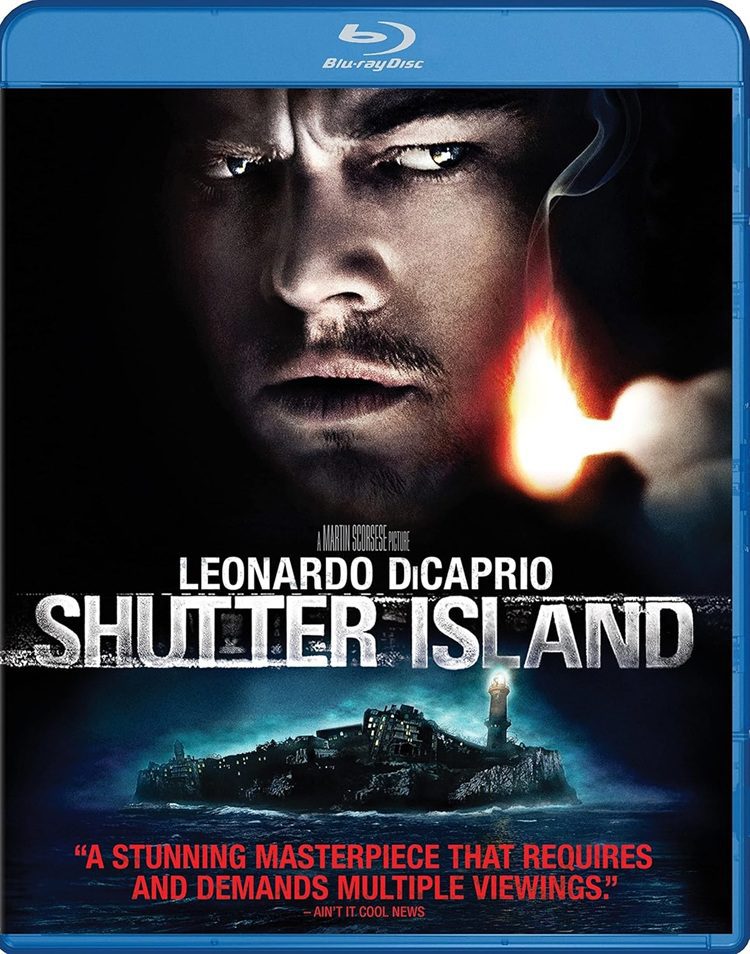
Martin Scorsese’s Shutter Island, based on the novel by Dennis Lehane, is a neo-noir / psychological thriller starring Leonardo DiCaprio and Mark Ruffalo. Drawing heavily from the visual and thematic traditions of 1940s and ’50s film noir, Scorsese transforms what could have been a conventional thriller into a dark and emotionally devastating character study. Ultimately, the film is a highly successful discussion on trauma, sanity, and the stories we tell ourselves to avoid unutterable pain.
Buy Shutter IslandThe film takes place in 1954 and follows U.S. Marshalls Edward “Teddy” Daniels (DiCaprio) and his new partner Chuck Aule (Ruffalo) as they travel to Ashecliffe Hospital for the Criminally Insane located on Shutter Island in Boston Harbor. They are investigating the mysterious disappearance of a patient, Rachel Solando, who was incarcerated for having drowned her three children. But from the moment the Marshalls arrive on the island, it becomes obvious that Teddy is also dealing with his personal demons. As clues start to be gathered, the film slowly changes its focus from external mysteries to the psychological distress of the protagonist.
Scorsese embraces the conventions of classic noir throughout the film. DiCaprio is excellent as the troubled detective. He is haunted by his past and driven by forces he barely understands. Set design and cinematography add to the mysteries: fog blankets the island, storm clouds rage overhead, and shadows dominate the frame. Like the heroes of classic noir, Teddy believes he is uncovering a conspiracy, yet his greatest obstacle may be his own inability to distinguish truth from illusion.
DiCaprio portrays a man whose confidence gradually gives way to confusion and desperation. Rather than presenting mental illness as a simple plot device, the film depicts a mind struggling to process overwhelming grief. Teddy’s nightmares, flashbacks, and recurring visions are not merely clues in a mystery; they are manifestations of trauma that refuse to remain buried. In the meantime, Chuck is the “probably” trustworthy sounding board. The plot takes a deep shift when Chuck disappears and Teddy is told he arrived on the island alone. From this point on, every clue is untrustworthy; every patient and doctor a possible deceiver.
What distinguishes Shutter Island from many psychological thrillers is its empathy. While the film generates suspense through uncertainty, its ultimate concern is not deception but suffering. The mystery matters because it reveals the devastating consequences of unaddressed trauma and the extraordinary lengths to which the human mind may go to protect itself from painful truths. Teddy struggles emotionally at a time when men were not able to discuss their emotions. While his new partner might care, he knows not to ask too many questions.
By the time the film reaches its unforgettable conclusion, Scorsese has crafted more than an intricate puzzle. Shutter Island becomes a tragic exploration of memory, guilt, and mental illness filtered through the lens of classic noir. It is a film that lingers not because of its twists, but because of the emotional wounds hidden beneath them.
