
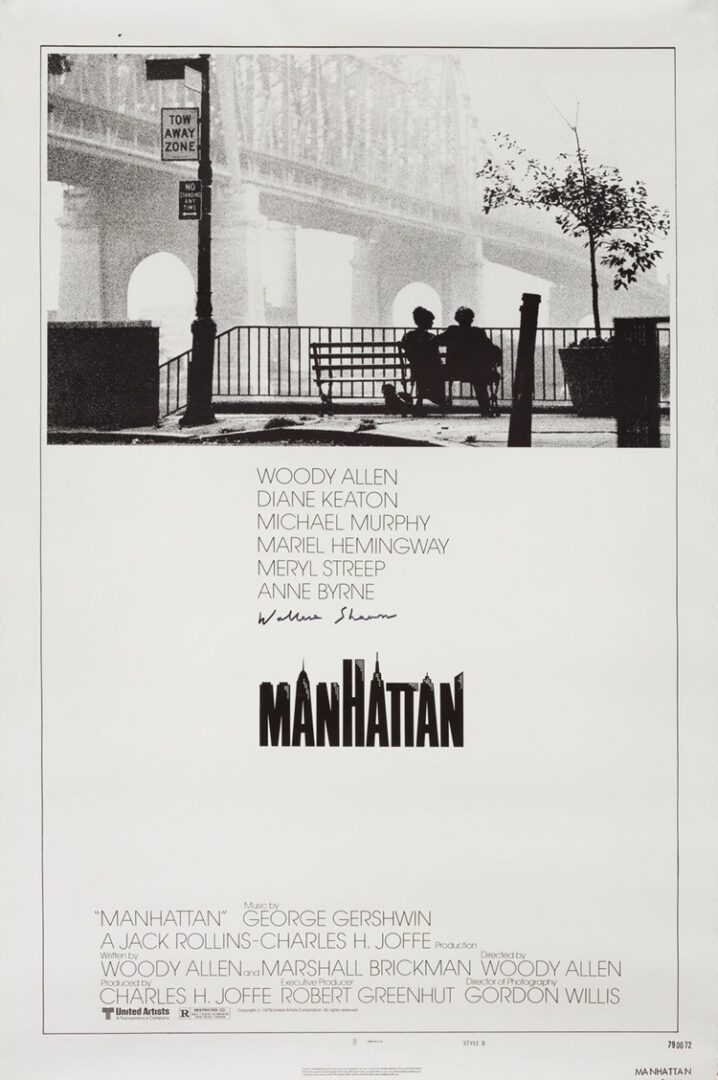
Woody Allen’s Manhattan is a love letter to New York City, photographed in gorgeous black and white, and accompanied by a Gershwin soundtrack that makes the city feel like the center of the universe. It is also a movie about people who are considerably better at analyzing their romantic lives than actually managing them.
Buy ManhattanAllen stars as Isaac Davis, a 42-year-old television writer who is twice divorced and dating Tracy (Mariel Hemingway), a 17-year-old aspiring actress. When Isaac meets Mary (Diane Keaton), the intellectual mistress of his married friend Yale (Michael Murphy), he finds himself reconsidering his relationship with Tracy while becoming entangled in the same romantic confusion that plagues everyone around him.
The film’s dialogue is sharp, its performances are excellent, and Gordon Willis’s black-and-white cinematography gives New York a grandeur that makes the city feel almost mythological. Allen has a gift for capturing the pretensions, insecurities, and self-justifications of educated urbanites, and Manhattan is among his most accomplished showcases. The characters are funny, occasionally insightful, and frequently ridiculous, even when they believe themselves to be the smartest people in the room.
The film’s opening montage, set to Gershwin’s Rhapsody in Blue, establishes its ambitions immediately. Manhattan becomes more than a setting; it is a state of mind, a place of intellectual stimulation, romantic possibility, and endless reinvention. The city’s bridges, skylines, and bustling streets provide an appropriately grand backdrop for characters whose lives are considerably less majestic.
Yet the film’s reputation as a romantic classic has become more complicated with time. Isaac’s relationship with Tracy, in particular, invites scrutiny that the film’s sophisticated atmosphere cannot entirely deflect. Allen clearly recognizes Isaac’s flaws, but the narrative’s eventual sympathy for him raises uncomfortable questions about whose feelings matter most. Tracy, meanwhile, displays a maturity that puts the adults around her to shame.
These tensions don’t erase the film’s considerable achievements, but they do make it harder to embrace its romanticism without reservation. Manhattan remains a frequently hilarious examination of people who mistake self-awareness for wisdom. Allen’s dialogue crackles with wit, and his characters’ endless rationalizations make them both entertaining and exasperating. The film understands that knowing what is wrong with your life and actually doing something about it are two entirely different accomplishments. The city gets the love story it deserves. The characters are another matter.
