
The Rangers’ season – I just can’t look.
Pop Culture Ephemera
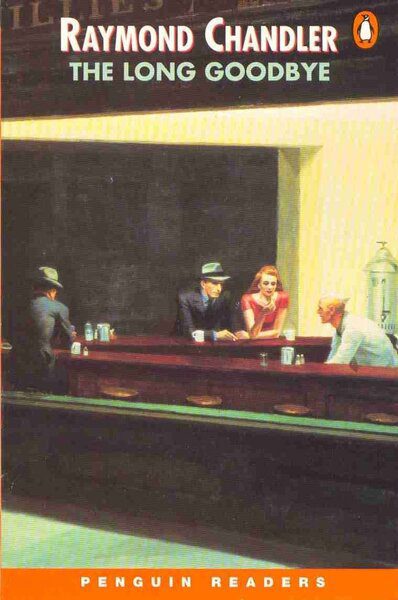
- Raymond Chandler – The Long Goodbye (1953) (Published by Houghton Mifflin): “There is no trap so deadly as the trap you set for yourself.” Book #6 in the Phillip Marlowe adventures is the most bloated, coming in at almost 400 pages. So far, it’s also my favorite. I have watched the 1973 adaptation by Robert Altman with Elliott Gould as Marlowe updated to the ’70s. It was such a crazy ’70s-specific themed film that I figured I was going into something completely different. To my surprise, even with the multitude of changes made by Altman, the basic plot and themes all remain.
Marlowe gives his drinking acquaintance, Terry Lennox, an overnight ride to Tijuana. Marlowe later finds that Terry is accused of murdering his millionaire wife, and to complicate the story, Terry commits suicide in Mexico leaving a confession letter. But Marlowe doesn’t think Terry committed the murder. The story leads him into a world of the upper class of a rich beach community of Los Angeles suburbs. He finds drinking, drugs, and plenty of adultery. Chandler is becoming more cynical with each novel. The mystery is easy to follow, the solution has a sort of satisfaction, but it’s never that easy with Marlowe. He’s got a different idea of justice that doesn’t always involve the authorities. I continue to love his turn of a phrase and descriptions of people and places. The author, Wade, is not even thinly disguised as a Chandler character. Killing off Wade feels like Chandler is making a point about his career. This is some of the best literature of the ’50s, not limited to the hardboiled-detective genre.
- The Last of Us – “When You’re Lost in the Darkness” (S.1 E.1) (HBO) (2023): “Billions of puppets with poisoned minds permanently fixed on one unifying goal: to spread the infection to every last human alive by any means necessary. And there are no treatments for this.” – Dr. Neuman. There are certain tropes of how to start a zombie television show. They are my favorite parts of zombie shows, those early moments when people are still going about their normal days and the infection is spreading. This show robs us of some of those moments. There’s a clever talk show appearance by scientists a decade previous that lays down the explanation of what is about to happen. The spread is fast and emotional and then we are flung into the future.
We quickly skip from Outbreak Day to 20 years later, and the show becomes later seasons of The Walking Dead after 30 minutes. We spend the rest of the episode catching up to the rebellion of the Fireflies and the rules of this new world. It’s a clever jump that can only happen when we have other established zombie shows that have set the rules. I like the idea that they can tell backstories of the characters, with two decades of material. The most intriguing character in the first episode is Ellie (Bella Ramsey) who may be the hope for mankind’s future. I also like that this is setting up as a political rebellion show as much as it is running from the undead. I know I should have been watching this for the past three years, and that first episode lived up to my hopes for the series.
- Howard Jones – “The New Song” (from Human’s Lib) (1983): “Don’t be fooled by what you see / Don’t be fooled by what you hear.” Released in late 1983, I don’t remember getting the 12″ single until spring of 1984. I was instantly attracted to this interesting New Wave meets Synth Pop sound. It was a more upbeat Thomas Dolby. Below is the more piano-heavy 12″ version that I feel is more representative of how I remember the sound. I was instantly in love with the artist, and for the next few years, I would be a huge advocate to anyone who would listen.
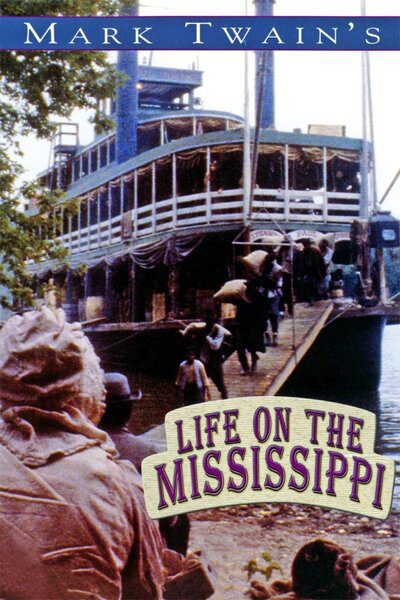
- Life on the Mississippi (1980) (Directed by Peter Hunt): “There she is, boy, the Mississippi, 1,200 miles of her, and the whole way is paving stones with the bones of dead steamboats and the reputations of dunderhead pilots!” – Bixby. The Mark Twain book of the same name isn’t an adaptable type of material. It’s equal parts history of the river, travelogue, and unrelated observations about the South.
This film is part of the PBS Great Performances films of the early ’80s. David Knell is well cast as Samuel Clemens, as is Robert Lansing as his first Captain Bixby. The film covers Twain’s adventures learning how to pilot a steamboat up and down the Mississippi. Plenty is embellished to create a dramatic story since most of what Twain wrote were wry observations. It holds the spirit of the first portions of the book. I would have liked a little more of that wry humor, but this is about as good as I could imagine it being adapted. Between the film and the book, I now know more about steamboats than I imagine the average living human.
- Evangelion: 1.11 You Are (Not) Alone (2007) (Directed by Hideaki Anno, Kazuya Tsurumaki): “Why Shinji? Exactly why did you come here? You mustn’t run away, you must confront your father, and you must confront yourself!” – Misato. This continues one of the most interesting evolutions of a series that I’ve ever watched. The series had an unsatisfactory, oddball ending, so they went back years later to retell the ending from a different point of view. Ten years after the series, the directors retell the first six episodes with better animation and better knowledge of how they want the story to unfold.
The best thing here is the animation. The series benefits from theatrical-budget-level animation. I’m less sure how to recommend it to people who haven’t watched the series. I have watched the series a few times, so I’m familiar with the story. This film boils down the three hours of the first six episodes into just over 90 minutes. I think I would have been lost if I wasn’t already aware of the character names and roles. This will be the rare four-part “trilogy” by the time the story is finished. This version is better at exploring the idea that Shinji and Rei don’t have to feel “alone” in their responsibility to save humanity. For those who think it’s strictly a rehash, there is something completely new introduced at the end of the film that hints at a deviation from the original series. This is worth a watch just for some of the best animation in the genre.

Best of the Rest
- The controversy at the time of release was that Howard Jones’ “New Song” sounded just like Peter Gabriel’s “Solsbury Hill” (1977). I have loved Gabriel’s song since the first time I heard it. The song’s a mental snapshot of his outlook on life after leaving Genesis to go solo. I was most familiar with a live version of the song I had recorded from an MTV-aired concert. It was only years later when I listened to them back-to-back enough to believe Jones’ response that it is influenced by but not a copy of Gabriel. Maybe it’s my respect for both artists that I choose to mentally put them in the same family but not one as a clone of the other.
- In 2013, unbeknownst to many of us, we were in the middle of a Vaporware movement. It was a slowed-down and chopped-up funk movement from what I understand. I had only recently heard this Saint Pepsi tune called “Brain” that samples/turns the screws on Howard Jones’ “New Song.” It’s an earworm that I keep thinking about for hours.
- The prequel series IT: Welcome To Derry (HBO) works because the backstory is right there in the original book. A prequel series for Friday the 13th from A24 and Peacock this October depends upon very small nuggets across multiple films from multiple writers. If it’s going to succeed, it’s got good timing where by default, horror fans are most forgiving in October. We haven’t see the franchise since a terrible remake in 2009, so there’s the ability to present a fresh take. Pamela Voorhees will be played by Linda Cardellini, which is truthfully my number-one reason for tuning in this fall.
Sunday Morning Tuneage Flashback
- Sunday Morning Tuneage from 6/13/2010, it was a sweltering day (again, repeat all that summer) and we were going to celebrate Father’s Day a week early with some brisket. I was in the middle of binging the graphic-novel collections of Y: The Last Man (DC Comics) and thought it was perfectly made to star Shia LeBeouf as Yorick. The third season of Breaking Bad (AMC) was coming to an end, and I was fully understanding I would eventually love this show (a statement that would come true four years later when I caught up). The list of the week is interesting enough that I think there will be a few new entries. It’s a list that could top 25 of just the essential songs.
My #59 Top TV Show of All-Time was Rockford Files (NBC) (1974-1980): This show had quite a bit going for it. It was a hardboiled detective show at the height of the genre on television. There was an lovable lead actor in James Garner, a sweet car (that Pontiac Firebird), and a catchy theme song from Mike Post. The show starts with an out-of-context phone message that was a reason to tune in at the beginning of each episode (brilliant move). It was only really popular the first season on NBC, and couldn’t gain serious traction on Friday nights. I’ve watched some episodes again on and off, and I like it but it doesn’t stand up against some of the competition in the genre. If you want to give it props, it’s that it is the blueprint for the slightly superior Magnum P.I. (CBS). I would not give it such a high ranking today, but I respect the effort. - BEST THE WHO SONGS OF ALL-TIME (2010)
- 10. “Pictures of Lily” (1967) (Non-Album Single)
- 9. “I Can See for Miles” (1967) (from The Who Sell Out)
- 8. “My Generation” (1965) (from My Generation)
- 7. “Behind Blue Eyes” (1971) (from Who’s Next)
- 6. “Squeeze Box” (1975) (from The Who By Numbers)
- 5. “You Better You Bet” (1981) (from Face Dances)
- 4. “Who Are You” (1978) (from Who Are You)
- 3. “Won’t Get Fooled Again” (1971) (from Who’s Next)
- 2. “Baba O’Reily” (1971) (from Who’s Next)
- 1. “Eminence Front” (1982) (from It’s Hard)
- BEST THE WHO SONGS OF ALL-TIME (2026)
- 10. “You Better You Bet” (1981) (from Face Dances): Still a little lost after the death of Keith Moon, this song has Daltrey thinking back to getting drunk while listening to T.Rex. It also has touches of the punk rock that Townshend was listening to in this era.
- 9. “Eminence Front” (1982) (from It’s Hard): At times, this has been my favorite Who song. Pete is still exploring his interests in punk. He’s got plenty of anger for Thatcher and her government – “Come to the party, dressed to kill.” This is one of their unforgettable keyboard riffs.
- 8. “Behind Blue Eyes” (1971) (from Who’s Next): Even in what seems like a love song (at least at the beginning), Pete can’t seem to hide some anger. The song builds into a crescendo that makes it one of my driving-playlist favorites.
- 7. “Who Are You” (1978) (from Who Are You): Pete had literally woke up in a Soho doorway. It’s about the excesses that the band was expected to write songs about anyways. It just plain rocks. Since the title isn’t a question, I assume it means the “You Are the Who” and “Who Are You”.
- 6. “Love, Reign O’er Me” (1973) (from Quadrophenia): Once again, the Who don’t understand the word “ballad.” It’s rock-opera quality for a rock opera that was never fully realized. The song builds and builds and just get out of Keith Moon’s way because he’s going to wreck the room.
- 5. “Baba O’Reily” (1971) (from Who’s Next): It’s probably sacrilege not to have this in the Top Three. That’s likely a function of how many times this was played in college (on Michigan home games, this is what we blasted to wake up the roommates and the neighbors). The amazing synthesizer opening that builds into one of the top stadium songs and then manages to end with a violin solo.
- 4. “I Can See for Miles” (1967) (from The Who Sell Out): It is nicely situated in the psychedelic rock of the day with groups like Cream. Then it adds in the production values of the Beach Boys and vocal layering of the Beatles to become something even bigger. Like many of the songs on this list, you walk away mostly remembering Keith Moon’s contribution. This is why you should usually be on air drums while listening to the group.
- 3. “My Generation” (1965) (from My Generation): The Beatles were singing songs about love, and here was Roger Daltrey stuttering about finding his way in the world. I can’t believe that a 20-year-old Townshend would ever have thought he’d be singing this song when he was 80 years old.
- 2. “Substitute” (1966) (Non-Album Single) / “I Can’t Explain” (1965) (from My Generation): I know it’s a slight bit of cheating to put two songs here. They have been the opening songs to almost every the Who concert since their release. I discovered both of them at some point in the ’80s, probably on the same day. The two songs show off their main influences at the time. “Substitute” has their American blues and Motown sound. “I Can’t Explain” is pretty much Pete writing a Kinks song, and that’s not a bad thing. I have worked backwards in their discography since I was first introduced to them. There’s something that puts these two above their early singles for me, it might be those little moments where Daltrey, Townshend, and Moon hint at what brilliance is to come.
- 1. “Won’t Get Fooled Again” (1971) (from Who’s Next): This song illustrates why I still find so much to love about the band. Keith Moon is at the top of his game. Roger Daltrey positively spits out the lyrics and that scream. Then there’s an amazing synthesizer solo in the middle that makes the eight-minute song into an epic masterpiece.
1976 in Review
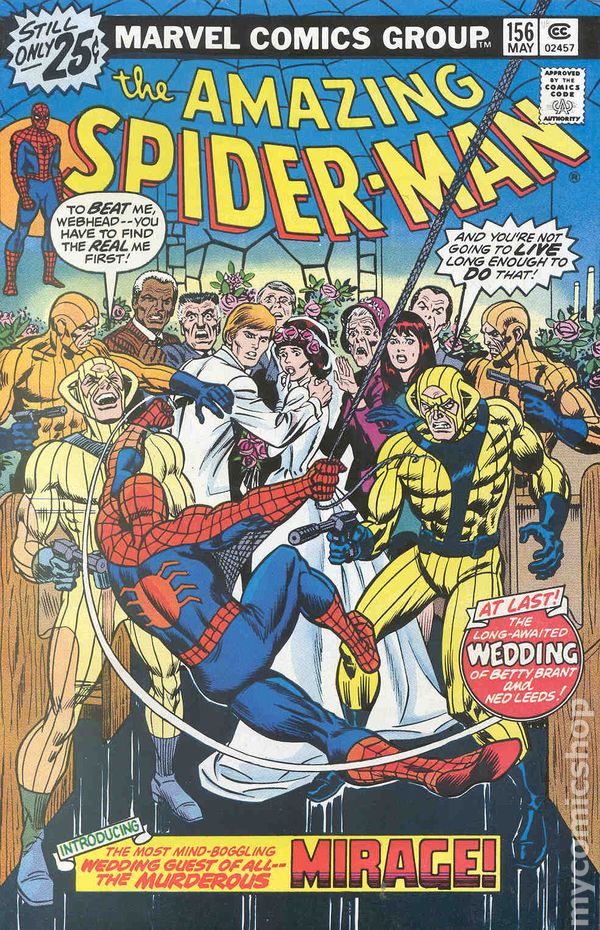
- May – Amazing Spider-Man #156 (Marvel Comics): Cover by John Romita, Sr. Written by Len Wein. Art by Ross Andru. Peter and Mary Jane attend the wedding of Ned Leeds and Betty Brant. It’s the debut of Mirage who can appear as other characters and tries to rob jewels from people at this random wedding. I wasn’t reading the book at this time, but I always appreciated the great cover designs. This one looked like it could be a Mad-Fold-In.
- May 30 – Johnny Rutherford won the shortest Indianapolis 500 of all-time. Rutherford was in the lead after 255 miles when a thunderstorm hit the track. After two and a half hours, the race was called and Rutherford walked to Victory Row.
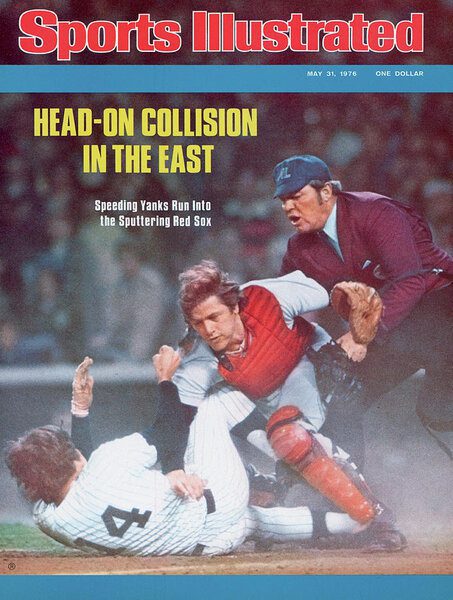
- May 31 – Sports Illustrated. The Red Sox magic year of 1975 was faltering early in the 1976 season. The Yankees were showing themselves as the AL team to beat to start the season. On May 20th, Dwight Evans threw a perfect strike to Carlton Fisk to nail Lou Piniella at the plate. A wrestling match ensued after the collision (see the cover photo). Bill “Spaceman” Lee and Greg Nettles would get into a fight on the 3rd base side with Nettles slamming Lee to the ground on his shoulder. The two would be ejected, but Lee would have a shoulder separation and miss considerable portion of the season (he was arguably their best pitcher in the 1975 season). The Red Sox would try to rally but finish in third place. The Yankees would continue an impressive run to 97 wins and the AL Pennant.
What the Hell Did I Put in My Mouth?

Red Bull Summer Edition: Sudachi Lime
I continue to be impressed with the Red Bull flavor profiles. The summer editions are the ones that I look forward to the most. This year’s edition is Sudachi Lime. It’s a pleasant flavor that’s somewhere between a Sonic Limeade and a 7-Up. Like the cherry sakura from the spring edition, this is tart without being overly sour. If you are looking for something refreshing with too much caffeine, this is a pretty good place to start this summer.
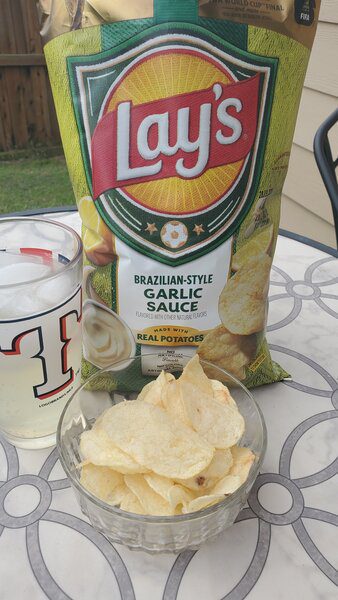
Lay’s: Brazilian-Style
Garlic Sacue
Ever since they were announced, I have been excited to try the Lay’s World Cup-inspired flavors this summer. The one that intrigued me the most was this Brazilian-style Garlic Sauce flavor. I love molho de alho sauce at restaurants. These are the real deal for garlic flavor. It’s a true buttery garlic taste on each chip. There’s just enough citrus to make it so you can plow through a ton of chips at a time. I can’t imagine a scenario where this isn’t my favorite new chip of the summer. Not for the garlic faint of heart but wow, these need a good BLT on the side to make a perfect picnic meal.
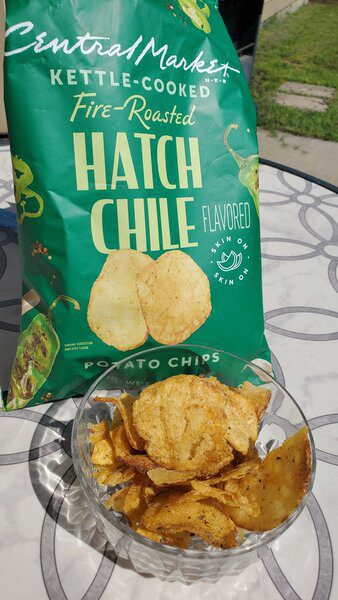
Central Market: Kettle-Cooked: Fire-Roasted
Hatch Chile
These chips have their own fair share of garlic flavor, but the hatch chiles are doing most of the work. Hatch Chile season is August in Texas, so I’m assuming I am late to the game. The flavor tastes like a genuine Hatch Chile, but without the heat. I think, like the Lay’s above, there is some citrus flavoring that takes away some of the burn. It’s a perfect level of heat, but only lacking perfection to me because of the avocado oil. I usually support that, but here it just masks the crunch enough to leave me wanting just a little more.
“This is a song to all of my friends
They take the challenge to their hearts
Challenging preconceived ideas
Saying goodbye to long standing fears” – Howard Jones
