
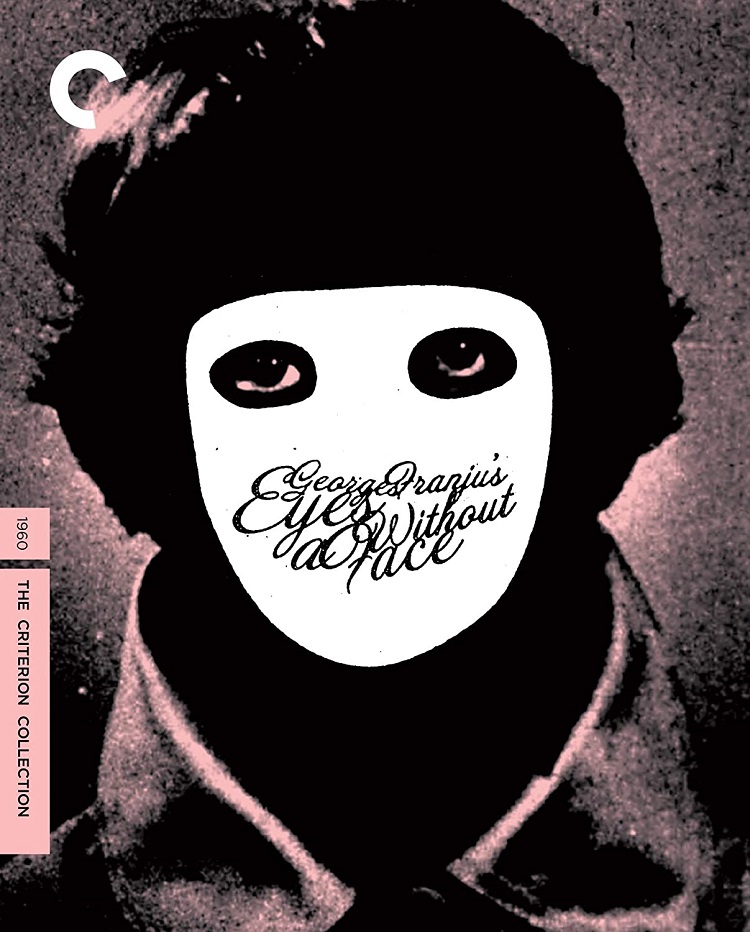
Before David Cronenberg perfected it, “body horror” was already a radical type of horror cinema. The fascination with bodily consequences has existed since the Grand Guignol days and it has gotten more extreme since then. However, one of the best and most modern of body-horror films is supremely gifted French filmmaker Georges Franju’s 1960 masterpiece Eyes Without a Face (Les yeux sans visage), a haunting and poetic portrait of obsession and playing God.
Buy Eyes Without a Face (Criterion Collection) Blu-rayPierre Brasseur gives a magnificent performance as Genessier, a brilliant doctor riddled with guilt after an accident that he caused disfigures his once beautiful daughter Christiane (an ethereal Edith Scob), who is believed to be dead by the outside world. With the help of his dedicated assistant (the enigmatic Alida Valli), he kidnaps young women in the city, brings them to his secluded mansion, and removes their faces and attempts to make a new face for Christiane. But because of his crazed personality and Christiane’s increasing isolation, Genessier’s experiments become too much, which leads to tragic consequences for everyone involved.
You don’t think that a film from early 60’s would be so gruesome, but there is imagery here that is quite horrifying, which gives the entire production a true daringness that feels ancient now. Franju knew how to be subtle but also disturbing with his storytelling. His film drips with atmosphere and feels like a poetic nightmare, one that you don’t want to end despite the subject matter. You can see how it influenced not only Cronenberg, but other legends like John Carpenter, David Lynch, Stuart Gordon, and Julia Ducournau.
I think that you could see the how Michael Myers’ mask in the original Halloween (albeit made from a William Shatner one) was inspired by Christiane’s (which encloses her disfigured face like a tomb). There are of course the actors who all do incredible work as their characters and their heightening desperations to make them feel like real people, not to mention the iconic score by Maurice Jarre that gives the film its intense juice. All of these factors add to an influential and timeless work of horror that always gets better with age. It remains a very uniquely grisly experience.
Lensed by cinematographer Eugen Schüfftan, I’m sure the film will be a revelation to collectors old and new with Criterion’s brand new 4K restoration. There are also the vintage but worthwhile supplements (from the original DVD and Blu-ray editions) that should further enhance the film’s legacy, which include Blood of the Beasts, Georges Franju’s infamous 1949 documentary about the slaughterhouses of Paris; archival interviews with Franju on the horror genre, cinema, and the making of Blood of the Beasts; an interview with Scob; excerpts from Les grand-pères du crime, a 1985 documentary about screenwriters Pierre Boileau and Thomas Narcejac; and trailers. There are also the terrific essays by by novelist Patrick McGrath and film historian David Kalat.
Obviously, this is a must own release of an all-time masterpiece of horror, one with both beauty and disturbia.
Other interesting releases:
Weapons (Warner Bros): Julia Garner and Josh Brolin star in Zach Cregger’s horror hit about a desperate community’s search for answers after 17 children mysteriously disappear in the middle of the night.
The Curse of Frankenstein (Warner Archive): A new deluxe edition of Terence Fisher’s 1957 bloody reimaging starring Sir Peter Cushing as mad scientist Victor Frankenstein and Sir Christopher Lee as his homicidal creation.
Baskin (Severin): A squad of unsuspecting cops venture through a trapdoor to Hell when they stumble upon a Black Mass in an abandoned building.
Bubble Bath (Deaf Crocodile): An animated 1980 musical comedy from Hungary about a neurotic interior decorator getting the jitters on his wedding day. He escapes to the apartment of an acquaintance of his bride-to-be to try and figure things out.
