
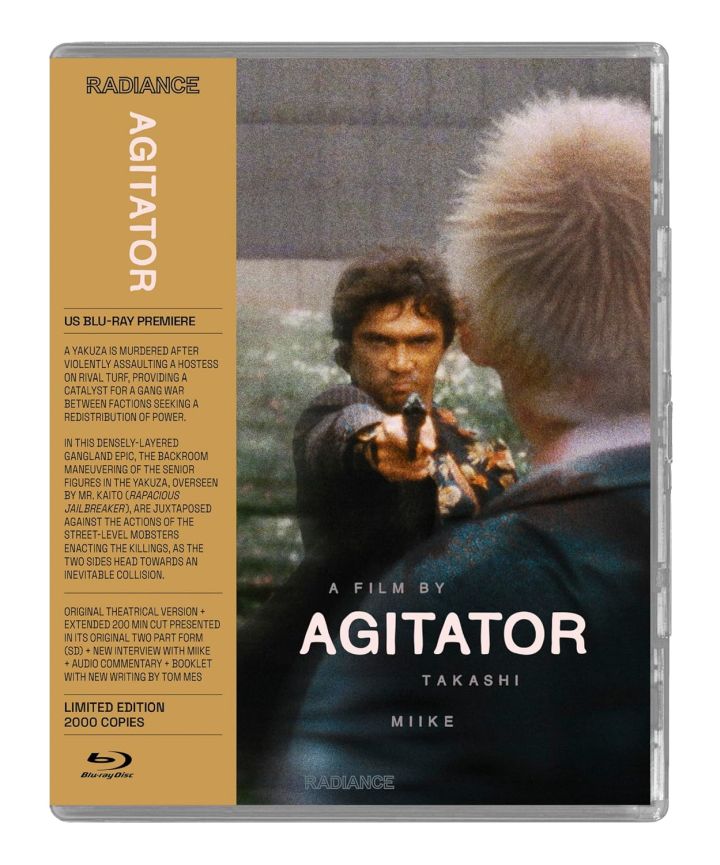
De-romanticizing yakuza is one of the major genres of yakuza movies. It’s ironic that the word “yakuza” comes from a losing hand in a traditional Japanese card game. They’re born as losers but apparently have a romantic image that has to be routinely shed.
Buy AgitatorAgitator is firmly within this genre, depicting the yakuza as a mix of scheming, hypocritical old men and hot-headed youngsters who hold to a code that is no longer relevant. Chief amongst these young bucks is Kenzaki, who is fiercely devoted to his boss Yoichi Higuchi. He swears by the honor of his small squad of violent ne’er do wells. Higuchi thinks Kenzaki is too intense, but he has his own unfailing loyalties.
These are tested when some ambitious men higher up in the organization decide they want to move even higher. They begin to manufacture conflicts that should position them to take leadership. They do not count on Kenzaki’s zeal in counterattacking. Where they expected beat-ups, Kenzaki lays down a body, and the violence only escalates from there.
Agitator (2001) was in a long line of yakuza movies directed by the Japanese cinematic dynamo Takashi Miike. He’s directed dozens in the genre. Some of them are sober and serious. Some, like Dead or Alive, devolve into bazooka fights in the streets, or are hybrid-surreal horror movies. Agitator is one of his most down to the earth, often filmed with hand-held cameras and with action that doesn’t go over the top into fantasy.
Because Agitator is not just about yakuza violence. It has plenty, and some of it gets incredibly bloody. But the most pointed parts of the film are about the moments waiting between the battles. Higuchi is married and has some nice scenes with his wife. Kenzaki has a girl he likes, but he gets very little time to spend with her.
Though there are Godfather-like machinations and power plays, Agitator is largely about the hollowness of a gangster’s life. He has the surrogate family of his brothers in arms. However, when they’re not in violent action, they’re not doing much of anything. They have their loyalty to their bosses, but to them these men are pieces to be moved around on a board, not people.
Higuchi is an exception. He loves his men and does what he can to protect them. Unfortunately, their zeal in protecting their bosses’ honor only makes them a liability to the organization at large.
Agitator is a long movie, clocking in at two-and-a-half hours, and this release includes the expanded television version which is 50 minutes more. This expanded running time focuses on the more intimate personal details already so prevalent in the film.
What the film most reminded me of, though this is anachronistic, are the cutscenes from the video game series Yakuza. This is fitting since Takashi Miike directed a film adaptation of that game in 2007. But Agitator seems a clear antecedent in the conflicts in that game, which contrasts the loyalties of the foot soldiers to the ambitions of their superiors.
It’s a slow film, despite sporadic violence. But the deliberate pace lets the weird, pointless lifestyle of the yakuza feel more real and pointed.
Agitator has been released on Blu-ray by Radiance. Extras include the extended 200-minute version of the film (only in standard definition), an audio commentary by Tom Mes, and a new video interview with the director.
