
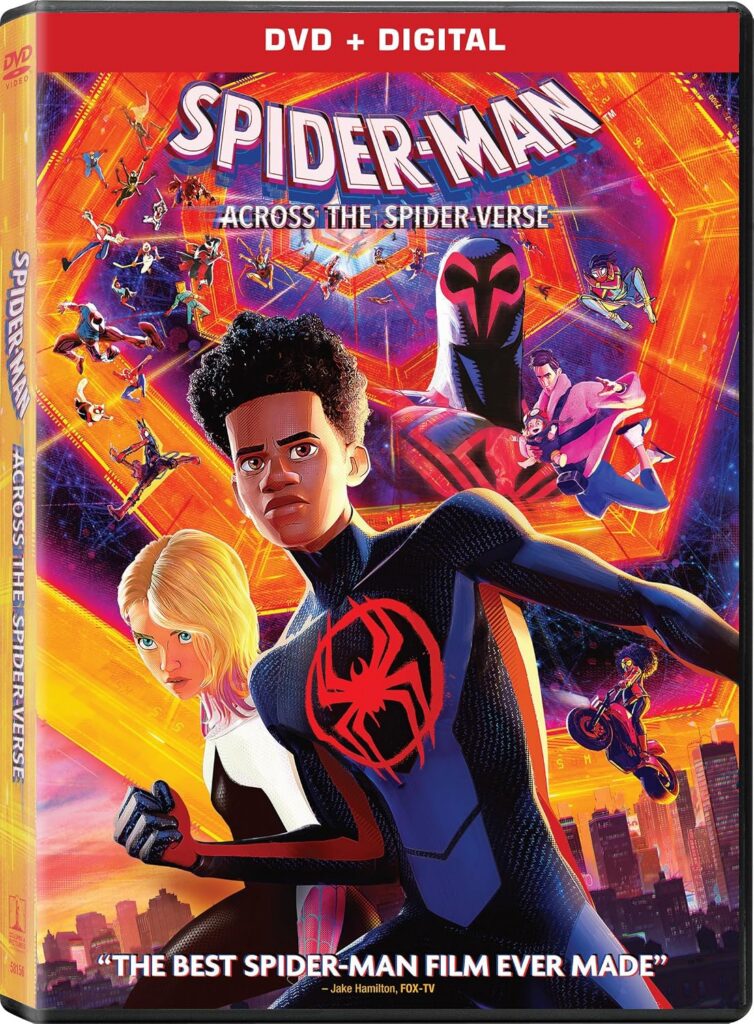
Few sequels have the confidence to expand everything that made their predecessor special without losing sight of its emotional core. Spider-Man: Across the Spider-Verse somehow manages that balancing act. Bigger, bolder, and even more visually adventurous than Into the Spider-Verse, the film delivers a thrilling superhero adventure while remaining deeply invested in the personal journey of Miles Morales (Shameik Moore). The result is one of the most exciting animated films of the decade.
Buy Spider-Man: Across the Spider-verseThe first aspect of the film that draws your eye is the animation, which pushes the boundaries of what mainstream animation can accomplish. Every universe has its own artistic identity, from watercolor-inspired skylines to comic-book textures that seem to leap off the screen. Rather than simply looking beautiful, these visual styles become extensions of the characters and worlds they represent. It feels less like watching a traditional animated movie and more like flipping through an impossibly elaborate graphic novel that has come to life.
Yet for all its visual spectacle, the film never forgets that Miles is its beating heart. Shameik Moore again brings warmth, vulnerability, and determination to the character, portraying a teenager caught between extraordinary responsibility and ordinary family expectations. His relationships with his parents (Bryan Tyree Henry and Lauren Velez) and Gwen Stacy (Hailee Steinfeld) provide the story with genuine emotional weight, making the stakes feel personal. The film’s exploration of identity, destiny, and the desire to define one’s own future gives the action a meaningful foundation.
The screenplay deserves credit for juggling an astonishing number of characters without becoming incomprehensible. New Spider-people appear at a dizzying pace, yet many leave lasting impressions despite limited screen time. Oscar Isaac’s Miguel O’Hara is an especially compelling addition, serving as a morally complex antagonist whose motivations are understandable even when his methods are unsettling. Rather than presenting a simple battle between good and evil, the story invites viewers to consider whether tradition and sacrifice should outweigh hope and individual choice.
The action sequences are exhilarating, filled with kinetic energy and inventive choreography. Every chase scene and confrontation feels original, often using the unique abilities of various Spider-heroes in clever and surprising ways. Composer Daniel Pemberton’s energetic score perfectly complements the animation, while the soundtrack adds a contemporary pulse that keeps the film moving at a relentless pace.
If there is one criticism to be made, it is that the film occasionally feels almost too ambitious. The sheer volume of ideas, characters, and visual flourishes can be overwhelming, and its cliffhanger ending may frustrate viewers expecting a more self-contained story. Even so, those choices feel less like shortcomings than evidence of filmmakers willing to take creative risks rather than give us a sequel we have already seen a hundred times.
Spider-Man: Across the Spider-Verse is a rare blockbuster that excels on nearly every level. It offers breathtaking artistry, memorable performances, emotional storytelling, and exhilarating action while challenging expectations of what an animated superhero movie can be. Few recent animated films have combined spectacle and heart so successfully, making this an unforgettable experience that leaves audiences eagerly waiting for the next chapter.
