
Though I am very much a fan of Stanley Kubrick’s films, I have put off watching Barry Lyndon for years. Its reputation exceeds it. They say it is deliberately paced, slow, not much happens, and it is rather dull. The cinematography is beautiful, of course, but the story is a bit of a slog. And it is long. Three hours long. Even the synopsis you get – that of an Irish rogue who wins the heart of a rich widow in order to become an aristocrat in 18th century England—sounds uninteresting.
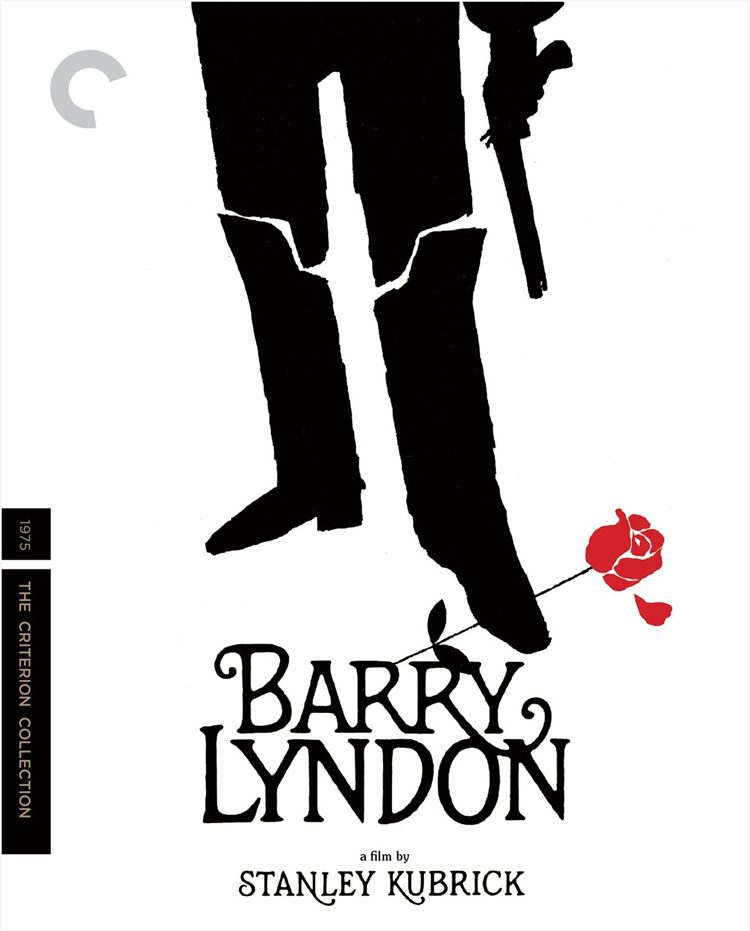
Buy Barry Lyndon (Criterion Collection)But then I got a copy of this new Criterion Collection disc, with a new 4K UHD transfer, and I just had to watch it. Technically, I received a review copy, so I did have to watch it and write this review, but if that weren’t true, I’d still “have” to watch it because sometimes you simply can’t put off what you’ve been waiting for the right moment to do any longer.
I love when you put off watching something, and then when you finally get around to it, you wonder why it took you so long. Barry Lyndon is fantastic. While it is deliberately paced, it never felt slow. It isn’t boring.
It tells the life story of one Barry Lyndon (Ryan O’Neal). It is a biopic of a fictional character. As such, it just tells the highlights; it skips from one important event to another. In that way it reminded me of Goodfellas, and nobody says Goodfellas is boring. Well, it is like Goodfellas if Goodfellas was set in the 1800s, had a lot less cursing, and instead of Eric Clapton and the Rolling Stones on the soundtrack, there was Vivaldi and Schubert. So maybe it isn’t that much like Goodfellas. But maybe it is? There is actually a significant amount of violence in Barry Lyndon. Here it is more war-based than backroom stabbings and beatdowns, but there are floggings and duels. And while Barry Lyndon doesn’t use violence as a means to get what he wants, he certainly schemes a lot to ensure he lives the type of lifestyle he thinks he deserves.
Anyway. We begin in Ireland. Barry Lyndon is then known as Redmond Barry. He is of the genteel class but very poor. He’s in love with his cousin Nora (Gay Hamilton), and while she reciprocates his love, she knows she must marry someone with money and station. Barry’s infatuation is so strong, his jealousy so overwhelming, he insults her suitor and shoots him in a duel. As such, he is urged to flee to Dublin for a time to avoid being arrested.
On his way he stops at an inn for a glass of water. He’s invited to sit and eat by an older man and his son. The men intend to rob Barry, but he doesn’t know this. He declines their invitation and goes on his way. Sometime further down the road, those men rob him anyway, as if it was fated for him to become penniless. Fate plays a large part in the life of Barry Lyndon. Things just seem to happen to him no matter what he does in life. The narration by Michael Hordern often insinuates fate into the story.
Barry joins the English Army and fights in the Seven Years War. After one vicious battle, he deserts but is soon captured by the Prussians and forced to fight for them. He ingratiates himself to Captain Potzdorf (Hardy Krüger) and after the war is hired by Potzdorf’s uncle to spy on Chevalier de Balibari (Patrick McGee), an Austrian diplomat and professional gambler whom they think is actually an Irish spy. Instead, Barry becomes friends with the Chevalier, and they successfully flee, becoming quite successful as roaming gamblers amongst the nobility set.
The film is broken into two parts; the first could be considered the rise of Barry Lyndon, and the second, then, would be his fall. In the second part, he meets, seduces, and marries Lady Lyndon (Marissa Berenson), a very rich lady of nobility. She bears him a son whom he adores and spoils, while he detests and routinely humiliates her child from a previous marriage. He also openly cheats on her and spends her money like there is no tomorrow. This will eventually all catch up to him, and Barry will once again find himself in tragic situations.
So, as you can see, the film certainly doesn’t lack for incident. There are duels and battles, gambling and lovemaking. I don’t know how anyone could call all of that boring. Kubrick does film them with a certain stateliness. He often shoots a scene in wide shots, giving us the full breadth and depth of what is happening. Sometimes he’ll begin in close-up and then slowly pull back to reveal that what is happening on screen is merely a small part of the full panoply of life.
There is only one moment when the camera doesn’t seem to be locked into place. In a fit of rage, Barry attacks his stepson, beating him severely. The handheld camera moves in close and swings wildly, immersing us in Barry’s rage. But otherwise the camera seems to be an impassionate observer.
The Oscar-winning cinematography by John Alcott is stunning. Every scene is a rich, beautiful painting. Kubrick wanted to shoot many of the indoor scenes with natural lighting, and since this film is set in the 18th century, this meant candlelight. They had to invent specialized cameras in order to get what he wanted. What he got was some of the most exquisite shots ever put on film.
Far from being dull or slow, I found Barry Lyndon to be a wonderful, interesting, and entertaining film. It is funny, too. There is some wonderful wordplay, and there is one scene in which an older man is scolding Barry for having an affair with his wife. Barry verbally fights back and suggests that anytime the old man wants satisfaction, he’ll be waiting. Barry leaves, and the old man goes into a coughing fit and clutches his chest. The narrator informs us that the man died, and as he begins to go into details, Kubrick cuts to black as if those details don’t matter to us in the least. They certainly don’t matter to Barry Lyndon. Kubrick is often doing little things like that, far from being an unapproachable art film this makes Barry Lyndon wholly entertaining.
The Criterion Collection presents Barry Lyndon with a new 4K UHD transfer, and it looks absolutely stunning. You could pause this film at any moment and be blown away by just how beautiful it is.
Extras include the following:
- New 4K digital restoration, with uncompressed monaural soundtrack
- Alternate 5.1 surround soundtrack, presented in DTS-HD Master Audio
- One 4K UHD disc of the film presented in Dolby Vision HDR and two Blu-rays with the film and special features
- Interviews with the cast and crew as well as archival audio featuring director Stanley Kubrick on the film’s cinematography, costumes, editing, and production
- Interview featuring historian Christopher Frayling on production designer Ken Adam
- Interview with critic Michel Ciment
- Interview with actor Leon Vitali about the 5.1 surround soundtrack, which he cosupervised
- Interview with curator Adam Eaker about the fine-art-inspired aesthetics of the film
- Trailers
- English subtitles for the deaf and hard of hearing
- An essay by critic Geoffrey O’Brien and two pieces about the look of the film from the March 1976 issue of American Cinematographer
Don’t be put off like I was by the general response to this film. It is not too slow; it certainly isn’t boring, but it is beautiful, deeply felt, and wholly entertaining.
