
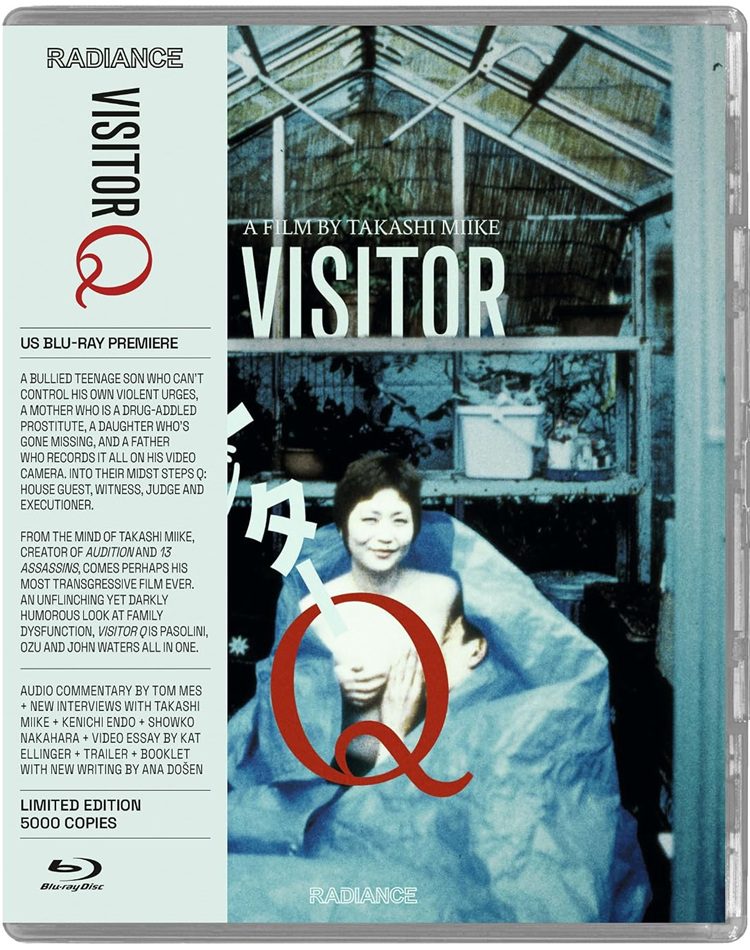
As any dedicated film lover knows, Takashi Miike is one of the most fearless enfant terribles in movie history. He never holds back in his approach to shocking even the most jaded of viewers. He’s done this with films like Audition, Ichi the Killer, The Happiness of the Katakuris, Gozu, and others. With his transgressive and bizarre 2001 film Visitor Q, he goes after the nuclear family, with dysfunction and all.
Buy Visitor QShot in documentary realism that evokes the film’s subject matter, it often compares to Pasolini’s Teorema, meaning that a magnetic stranger that comes into the lives of a family in crises and changes their lives forever. However, Visitor Q is Teorema on crack.
The family at the center of this f**ked-up film operates on levels of incest, bullying, necrophilia, lactation, and rape. The mother is a prostitute and heroin addict who is constantly being abused by her son, who also gets bullied himself. The father is an ex-TV reporter who has sex with his own daughter and films the son being beaten up. He also murders a co-worker and has his way with her corpse. Sounds like a fun family (sarcasm). When Q, a stranger, shows up, his influence seems to add balance to their strange lives and brings them together.
The film offers no easy answers. Has the family changed their ways? Or are they going to continue their crusade of depravity, which may lead to eventual tragedy. You never really know. But I’m sure you’ll be screwed up in some way.
I don’t know what this says about me, but I actually admired it. I gravitate towards films that refuse to play nice. And this one definitely sums that up. Miike throws everything at the screen and offers no apologies whatsoever. This is just one of several reasons why his oeuvre has longevity and a big cult following.
Obviously, this isn’t a film for everyone, but if you’re in the mood for taboo-breaking cinema, then look no further than Visitor Q. You won’t see a stone left unturned I can tell you that.
The good folks at Radiance (who always take risks) have provided a solid new transfer and special features such as commentary by film critic Tom Mes; new interviews with Miike, actors Kenichi Endo and Shoko Nakahara; a new visual essay by critic/author Kat Ellinger; and a trailer. There is also booklet with a great new essay by critic Ana Dosen.
