
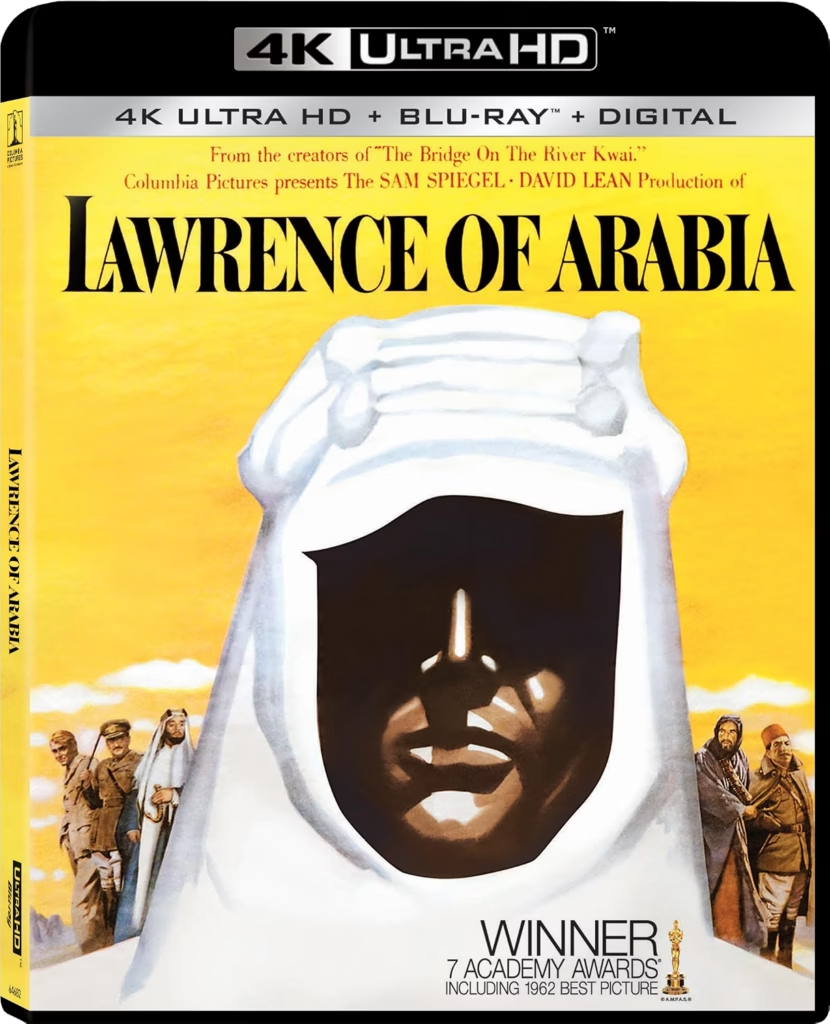
David Lean’s Lawrence of Arabia follows the extraordinary journey of a British Army officer who becomes an unlikely leader during World War I. Set against the sweeping deserts of the Middle East, the nearly four-hour epic explores ambition, identity, and the complicated relationship between personal glory and political loyalty.
Buy Lawrence of ArabiaPeter O’Toole stars as T.E. Lawrence, a British officer whose knowledge of Arabic and unconventional approach to military strategy leads him to an unusual assignment. Initially sent to assess Prince Feisal (Alec Guinness), Lawrence gradually earns the trust of Arab leaders, including Sherif Ali (Omar Sharif), and helps unite rival tribes against their common enemy, the Ottoman Empire. His military successes make him a celebrated figure, but his growing identification with the Arab cause creates friction with his British superiors and raises questions about his own loyalties.
O’Toole delivers a fascinating performance, capturing Lawrence’s charisma, eccentricity, arrogance, and vulnerability. He makes the character simultaneously compelling and difficult to understand. Lawrence enjoys the attention his accomplishments bring, yet he also appears increasingly troubled by the violence required to achieve them. His transformation from an ambitious young officer into a celebrated military leader becomes particularly interesting as his confidence gives way to grandiosity and self-doubt.
The supporting cast is equally effective. Omar Sharif makes a memorable impression as Sherif Ali, providing a strong counterbalance to Lawrence’s unpredictable personality. Alec Guinness brings dignity to Prince Feisal, while Anthony Quinn, Jack Hawkins, and Claude Rains contribute to the film’s extensive ensemble. Their characters help illustrate the competing interests and political maneuvering surrounding the Arab revolt.
Lean’s direction and Freddie Young’s cinematography make the desert an essential part of the storytelling. The enormous landscapes emphasize both the isolation of the characters and the scale of their undertaking. The famous image of Lawrence emerging from the desert heat remains one of the film’s most striking moments. Maurice Jarre’s memorable score adds another dimension to the proceedings, particularly during the film’s extended journeys across the sand.
For all its spectacular action sequences, Lawrence of Arabia is ultimately a character study about ambition, identity, and the dangers of becoming consumed by one’s own legend. Its treatment of British imperialism and Arab nationalism is complicated by the perspective of its central character, and some aspects of its historical representation invite scrutiny. Nevertheless, the film’s exploration of political manipulation and conflicting loyalties remains engaging.
More than six decades after its release, Lawrence of Arabia remains a rewarding cinematic experience. Its combination of historical drama, personal conflict, and an unforgettable central performance makes it a landmark of filmmaking.
