
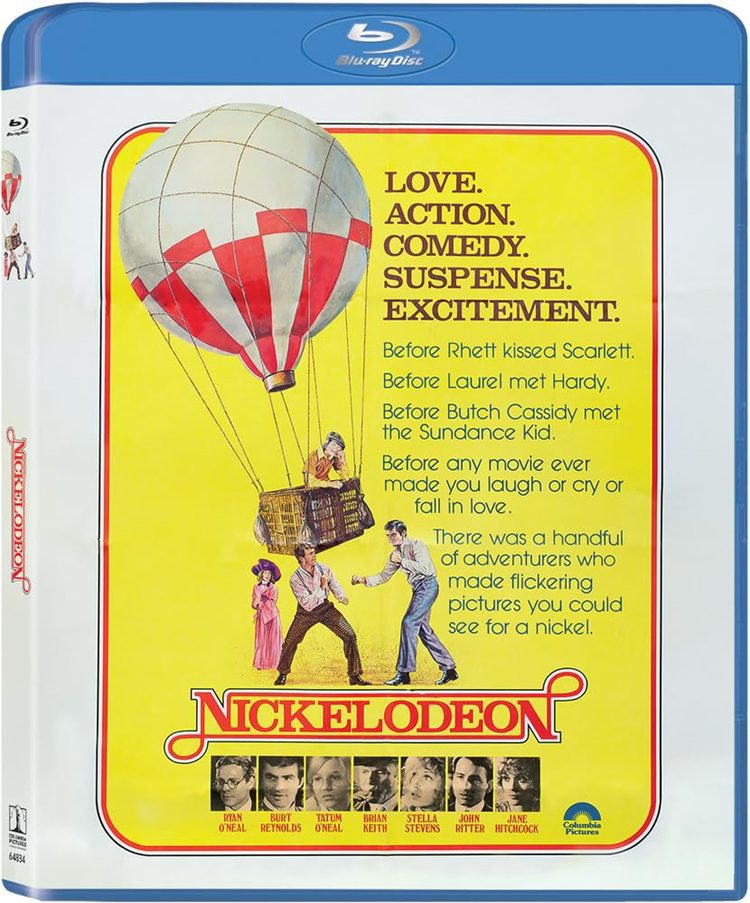
Peter Bogdanovich’s Nickelodeon (1976) takes us from the early days of the dingy storefront nickelodeons which showed very short, single-reeled films to the grand picture houses and multi-reeled epic productions like Birth of a Nation (1915). Starring Ryan O’Neal, Burt Reynolds, and Tatum O’Neal, Nickelodeon is a fast-paced, laugh-out-loud, well-researched tribute to the pioneers of the early silent era in cinema. Also along for the shenanigans that include an epic fist fight and a perilous hot-air-balloon ride are John Ritter, Stella Stevens, Brian Keith, and Jane Hitchcock.
Buy Nickelodeon from MovieZyngWhile fleeing a courtroom disaster, inept lawyer Leo Harrigan (Ryan), a Harold Lloyd-type character, quite literally stumbles into writing scenarios for a motion-picture-production company. That very same day he bumps into a pretty young lady (Hitchcock) on her way to join a vaudeville traveling company. Meanwhile, Buck Greenway (Reynolds), an alligator wrestler from Florida with magnetic charm, bumbles into riding a horse for a stage production which will eventually lead him into working alongside a rival motion-picture company. Through a series of fateful events, they all come crashing together out west and join forces to begin an epic adventure through the early days of cinema where anybody from any background could fumble their way to stardom while making innovative, unforgettable “pieces of time” enjoyed by millions.
Nickelodeon captures the spirit of those silent comedies perfectly in full sound and color. The old gags are recreated well without being forced or too silly while the dialog is filled with snappy, quick quips and jokes. It illustrates how many big-time players in early motion pictures, from directors to stars, quite literally stumbled into the business. O’Neal and Reynolds play great together as opposites and friendly rivals. John Ritter, who Bogdanovich wanted for a bigger part, stands out in his first major big-screen role just before he hit it big as Jack Tripper on Three’s Company. Tatum O’Neal shines again here as a smart but subdued firecracker of a wheeler dealer.
The special features on this two-disc Blu-ray edition include two versions of the movie, the color theatrical version (122 min) and the black and white director’s cut (125 min). On disc one is an audio interview with co-writer W.D. Richter, which plays over the first 45 minutes of the movie. It’s insightful and gives another perspective of how the movie came about from page to screen as well as Bogdanovich’s state of mind at the time of production. Disc two features Bogdanovich’s cut, which adds back a key scene and his audio commentary. His recollections are great and his extensive research, knowledge, and overall love for the silent era comes across clearly. He points out where the inspiration for certain characters and scenes stem from while confirming the few subtle nods to legends like Keaton, Lloyd, and Chaplin. He acknowledges which scenes were adapted straight from the lives of his friends Allan Dwan and Raoul Walsh, who were there in those early days. He also discusses his disappointment with filming in color and the choice of actors.
Personally, I think the choice to film in color is perfect as it accentuates hues that could have been available at the time and how they related to fashion and daily life. If Bogdanovich had filmed in B&W, then he might as well have shot it silent as well which would have made the work a bland imitation of those classic gags rather than something current, fresh, and apart from those original masterworks. Sure, Bogdanovich could have made a more serious drama about that time period in movie history with a focus on how the gags were done but why? There are documentaries for that.
Buy Nickelodeon from AmazonAs it is, Nickelodeon, with its sound (that broken luggage sound gets me everytime), color, and star choices, stands as a modern tribute to those pictures of the early twentieth century as well as to those pioneers who innovated a whole new way to make them. Nickelodeon presents some of the genius of the silent era to a new generation that may otherwise have had no interest.
